

 English
 日本語
日本語 Español
 عربى
عربى Deutsch
 Français
 Personal Wipes
 Baby Wipes
 Health Care & Medical Wipes
 Household Wipes
 Pet Wipes
 Industrial & Automotive Wipes
 Biodegradable Wipes
 Cotton Buds and Pads
Content
Two grams of the right superabsorbent polymer will hold most of a litre of saline while you press down on it with your thumb. That one property explains why SAP sits inside diaper cores, wound dressings, spill kits, cable water-blocking tape and horticultural substrates, and why buyers argue about test methods long before they argue about price.
This guide covers what superabsorbent polymers are, how the three main production routes change their behaviour, which data sheet numbers predict field performance, and where the absorbent side of a hygiene product meets the wet wipe used beside it.
What Is a Superabsorbent Polymer?
A superabsorbent polymer is a lightly cross-linked, water-insoluble polymer network that absorbs and retains roughly 100 to 500 times its own mass in water or saline, swelling into a gel rather than dissolving.
Most SAP sold today is sodium polyacrylate. Acrylic acid is partially neutralised with sodium hydroxide, usually to 65 to 75%, then polymerised with a small dose of cross-linker. Those cross-links turn a water-soluble thickener into an insoluble network.
Two limits are worth remembering. SAP absorbs aqueous liquids, not oils, so a granule dropped into engine oil simply sits there. And unlike cellulose pulp, SAP holds liquid against pressure rather than releasing it, which is why a core is mostly SAP with a little pulp for wicking.
How SAP Works: Cross-Link Density and Production Routes
SAP performance is decided at the reactor. Neutralisation degree, cross-linker dose and polymerisation route set the balance between how much liquid a particle takes up and how much it keeps when squeezed.
- Neutralisation degree: a more neutralised acid raises osmotic pressure and free swell, but can soften the gel.
- Cross-linker dose: more cross-linking lowers absorbency and raises gel strength and load retention.
- Surface cross-linking: a post-treatment that densifies the outer shell so particles stay permeable under load.
- Particle size distribution: fines below about 150 micrometres cause dust and gel blocking.
| Route | Particle formation | Typical shape | Common end use |
| Gel polymerisation | Bulk aqueous batch, then dried, crushed and sieved | Irregular, angular, broad size spread | Industrial, agricultural and spill-control grades |
| Solution polymerisation | Continuous aqueous gel, dried and ground, usually surface cross-linked | Irregular with a denser shell | Diaper, pad and other hygiene cores |
| Suspension polymerisation | Monomer droplets dispersed in a hydrocarbon phase, polymerised as beads | Near-spherical, tight size spread | Cable, medical and controlled-release products |
Our team keeps a longer walkthrough of this topic in the guide to how SAP works, key applications and buying considerations.
Key Performance Metrics Buyers Should Specify
Four numbers decide whether a grade fits your product: free swell capacity, centrifuge retention capacity, absorption under load, and particle size distribution.
- Free swell capacity (FSC): liquid held per gram of dry polymer with no load, useful in marketing but weak as a predictor of leaks.
- Centrifuge retention capacity (CRC): saline retained after spinning in 0.9% sodium chloride, which is closer to real use.
- Absorption under load (AUL): retention measured while a defined pressure, usually 0.3 or 0.7 psi, is applied. This is the figure that tracks leakage.
- Particle size distribution (PSD): it sets feeding behaviour, dust and gel blocking, and fines under 150 micrometres are normally capped.
- Lower cost per kilogram
- Absorbs a large volume of pure water
- Gives liquid back under pressure
- Fits spill kits, horticulture and dewatering
- Surface cross-linked shell
- Keeps fluid under body weight
- Lower free swell on the data sheet
- Fits diapers, adult care and wound absorbents
Where SAP Is Used Across Industries
SAP is used wherever a liquid has to be captured and held rather than drained away, which puts it in disposable hygiene, medical absorbents, food packaging, transport safety, agriculture and industrial water management.
| Application | What SAP does | Typical format |
| Baby diapers and adult incontinence | Locks urine into a gel inside the core | Granules blended with fluff pulp, often 30 to 50% of core mass |
| Feminine care | Retains fluid in a thin pad without added bulk | Fine granules in a layered core |
| Wound dressings and surgical pads | Holds exudate and fluid away from skin and instruments | Fibre or granule loaded pads |
| Food packaging | Soaks up drip loss from meat, fish and produce | Absorbent pads and mats |
| Spill control and biohazard kits | Solidifies spills for safe removal | Loose granules and absorbent pillows |
| Agriculture and horticulture | Stores water in the root zone and releases it slowly | Potassium-based granules mixed into substrate |
| Cable and construction | Blocks water ingress in joints and tapes | Powder, tape and swelling yarn |
Adult incontinence care shows how two product families end up in the same purchase order. The core does the absorbing, the wipe does the cleaning, and most buyers want both from a partner that runs them under one quality system.
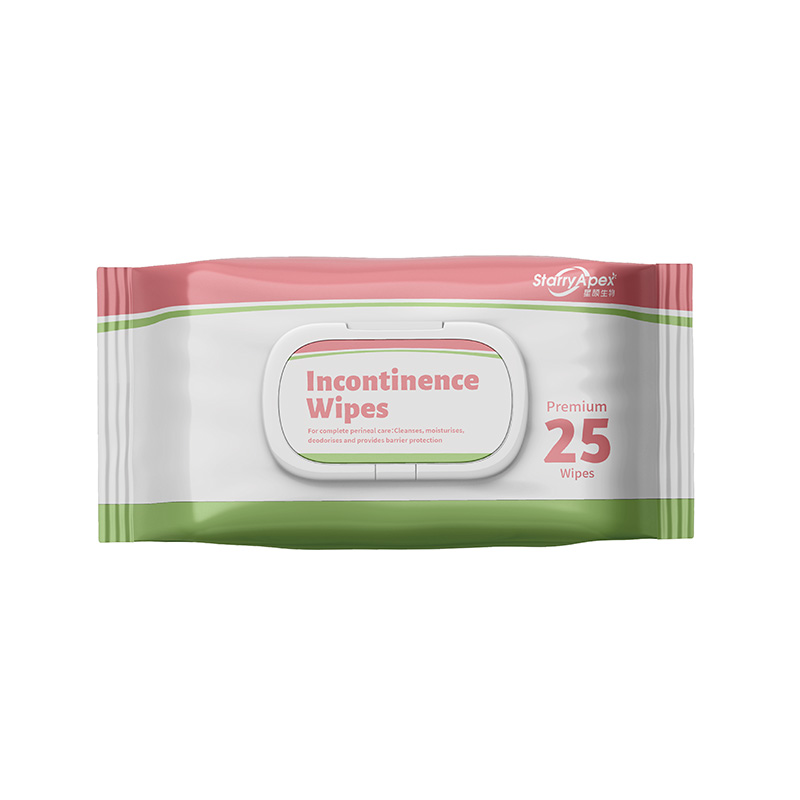 Custom Incontinence Wipes for Adult Care and Daily HygieneFor adult incontinence care routines where wipes accompany absorbent cores, this custom option uses soft non-woven fabric and a weakly acidic cleaning solution.View Product →
Agriculture is the one segment where salt choice matters. Potassium-based SAP is preferred in soil because sodium accumulation harms structure, even though sodium polyacrylate costs less.
SAP and Wet Wipes: Where the Two Categories Meet
Superabsorbent polymer almost never goes into a wet wipe itself. A cross-linked network inside the pack would absorb the lotion and leave the wipe dry and stiff within weeks, so the polymer belongs to the absorbent core or pad used beside the wipe.
Wipe formulations take the opposite route. The polymers used in lotions are water-soluble and non-cross-linked, chosen to stay in solution, and the recipe is built around preservative, pH and surfactant decisions rather than swelling behaviour.
The categories still meet in the supply chain. Wipes and absorbent hygiene products share buyers, cleanroom requirements and audit paperwork, and a manufacturer already running wipes in a controlled environment can support the surrounding range. Zhejiang StarryApex Biotechnology, for example, produces wipes in 100,000 class purification workshops under ISO 9001, ISO 22716, GMPC, ISO 13485 and BSCI certification, which covers much of what an absorbent product buyer asks to see.
A diaper wipe and the diaper it accompanies are usually specified together, so the wipe format often follows the core design.
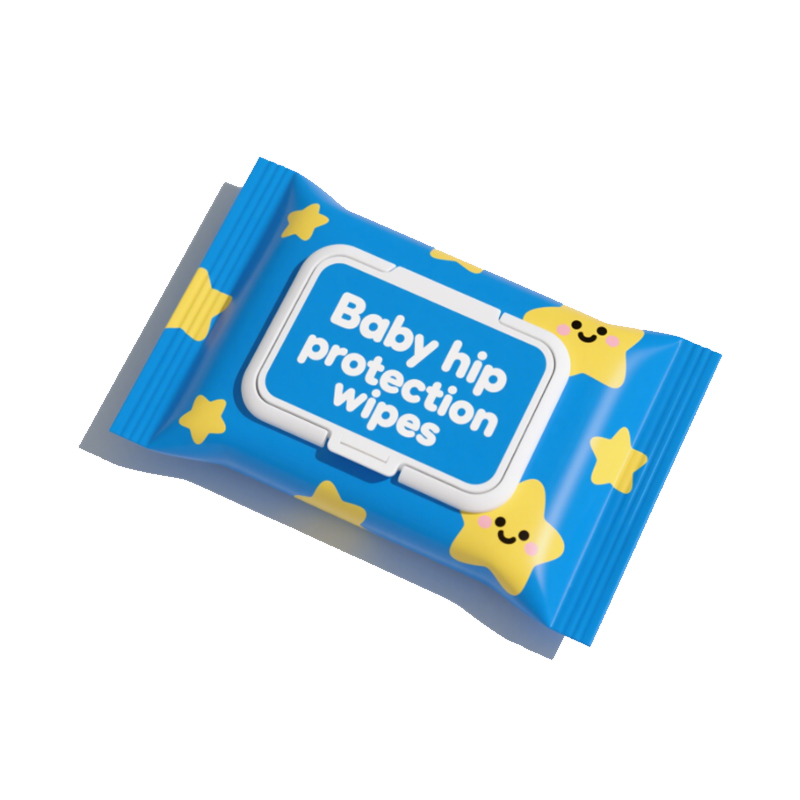 Baby Hip Protection Wet Wipes for Diaper Change CareA diaper-change wipe often specified alongside diapers, made with soft spunlace non-woven and purified RO water with marigold and aloe extracts.View Product →
Sourcing and Quality Checklist
Ask for the test method before you ask for the price, because two SAP quotations are only comparable when the load, the saline concentration and the sieving method match.
- Confirm the route and the post-treatment, and ask whether the grade is surface cross-linked.
- Request the full particle size curve rather than one mesh range, plus the fines percentage below 150 micrometres.
- Ask for residual acrylic acid, moisture and pH on the certificate of analysis for every lot, not only the first.
- Check packaging and transit, because SAP picks up humidity fast and bags need an intact polyethylene liner.
- Test incoming samples at your own target pressure and in your own formulation before you approve a container.
The same discipline applies to the wipes used beside an absorbent product. Where skin is already compromised, a low-residue format is the safer starting point, which is why 99% pure water wipes are often specified for the cleanup step in care routines.
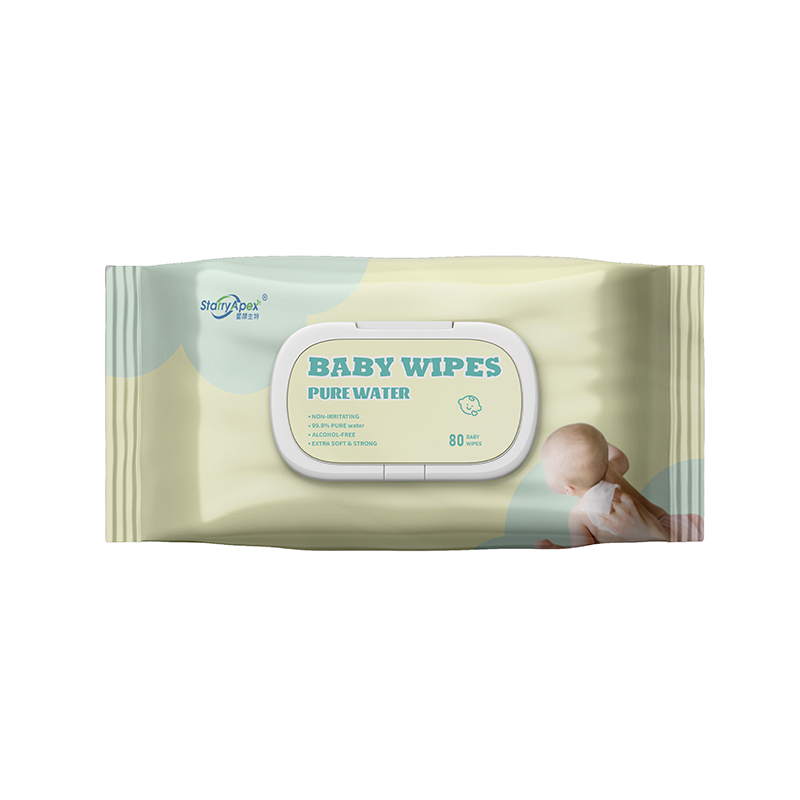 99% Pure Water Baby Wipes for Sensitive Skin CareA low-residue water wipe often specified for cleanup beside absorbent products, made with 99% purified water and soft cotton or modal non-woven.View Product →
Frequently Asked Questions
How much liquid can a superabsorbent polymer absorb?
A commercial hygiene grade holds 300 to 500 times its own mass in deionised water, 30 to 60 grams per gram in 0.9% saline, and roughly half of that under a 0.7 psi load.
Are superabsorbent polymers biodegradable?
Standard sodium polyacrylate is not readily biodegradable and should never be flushed. Starch-graft and cellulose-based alternatives break down faster but usually retain less liquid under load.
Why is SAP not used in wet wipes?
Because a wet wipe is already saturated. A superabsorbent network in the pack would take up the lotion and leave a dry, stiff wipe, so wipe formulations use non-cross-linked polymers instead.
What is the biggest sourcing risk with SAP?
Inconsistent particle size distribution. A shipment that drifts toward fines raises dust, changes feeding behaviour and causes gel blocking, even when the headline absorbency figure looks unchanged.

