

 English
 日本語
 Español
 عربى
 Deutsch
 Français
 Personal Wipes
 Baby Wipes
 Health Care & Medical Wipes
 Household Wipes
 Pet Wipes
 Industrial & Automotive Wipes
 Biodegradable Wipes
 Cotton Buds and Pads

Content
- 1 What Non-Woven Means in Plain Terms
- 2 The Bonding Routes That Decide Performance
- 3 Fibre Chemistry: Polypropylene, Polyester, Viscose and Cotton
- 4 Why Wet Wipes Are Built on a Non-Woven Substrate
- 5 Biodegradability: What Actually Breaks Down
- 6 A Sourcing Checklist for Non-Woven Buyers
- 7 Frequently Asked Questions
The term covers an unusually wide family. Filtration media, surgical gowns, diapers, crop covers and wet wipes are all non-wovens, yet they share almost no performance characteristics. For anyone sourcing wipes, the useful question is never simply whether a material is non-woven, but which fibre, which bonding route and which weight sit behind the sheet.
What Non-Woven Means in Plain Terms
Non-woven fabric is produced directly from fibres, so there is no warp, no weft and no loom anywhere in the process.
Production normally runs in three stages: fibre opening and blending, web formation, then bonding. Staple fibres of roughly 20 to 40 mm are carded into a parallel or cross-lapped web, which for wipes usually lands between 40 and 80 gsm. Bonding gives the sheet its memory, either by entangling fibres with water jets, by melting them together at calendar points, or by gluing them at crossings with a latex binder.
Because the web can be engineered in any direction, properties are dialled in rather than inherited. A cross-lapped web balances strength across machine and cross direction; a parallel-lapped web is strong one way and tears easily the other, which suits sachets and dispenser packs.
- Yarns interlaced at right angles
- High tensile strength both directions
- Frays when cut, needs hemming
- Reusable, heavier, higher cost at light weights
- Fibres laid as a web, then bonded
- Strength set by the bonding pattern
- Cuts cleanly, no fraying, no hemming
- Engineered for absorbency, loft and softness
The Bonding Routes That Decide Performance
The bonding route controls most of a non-woven's mechanical behaviour, so it belongs in the specification before price is ever discussed.
| Bonding route | How fibres are held | Typical weight | Practical fit |
| Spunlace | High-pressure water jets entangle the web | 40 to 80 gsm | Soft, low-lint baby and facial wipes |
| Spunbond | Continuous filaments laid and thermally calender bonded | 15 to 100 gsm | Durable carrier layers, industrial cloths |
| Meltblown | Hot air attenuates molten polymer into microfibres | 20 to 60 gsm | Barrier, opacity, solvent and oil pickup |
| Airlaid | Air-formed fluff pulp with latex or thermal binder | 50 to 120 gsm | Thick hand-feel, high lotion absorbency |
| Wetlaid | Fibres dispersed in water, then dried | 30 to 80 gsm | Uniform, paper-like hygiene sheets |
| Needlepunch | Barbed needles mechanically interlock the web | 100 to 600 gsm | Reusable industrial and automotive cloths |
Composite structures are common. An SMS build sandwiches a meltblown layer between two spunbond layers to trade softness for barrier performance, and a spunlace plus meltblown laminate lifts opacity without adding much weight.
Fibre Chemistry: Polypropylene, Polyester, Viscose and Cotton
Polypropylene dominates non-woven production because it is inexpensive, chemically inert and bonds cleanly under heat, but fibre choice is really a decision about softness, strength, absorbency and end-of-life.
- Polypropylene resists water, alcohol and most lotions, which is why it appears in disinfecting and medical wipes, but it absorbs nothing on its own.
- Polyester raises wet strength and abrasion resistance, making it the usual partner for industrial and automotive substrates.
- Viscose and rayon carry lotion into the sheet and give the soft, cool feel consumers associate with quality wipes.
- Cotton and bamboo serve premium and eco-positioned lines; both need verified certification before any compostability claim is printed.
Most commercial formulations are blends. A 70/30 viscose and polyester spunlace takes absorbency from viscose and wet strength from polyester, at a cost well below a pure cotton sheet of the same weight.
Why Wet Wipes Are Built on a Non-Woven Substrate
Nearly every wet wipe is a non-woven: the substrate carries the lotion, controls its release, and decides whether the sheet tears inside the pack or on the skin.
Spunlace is the default for skin contact
Hydroentangled spunlace at 40 to 70 gsm delivers low lint, a soft drape and enough wet strength for a pop-up lid. A typical 50 gsm substrate holds roughly three to four times its own weight in lotion, which means the same fabric can be sold as a 60-count or an 80-count pack simply by changing the load rather than the material.
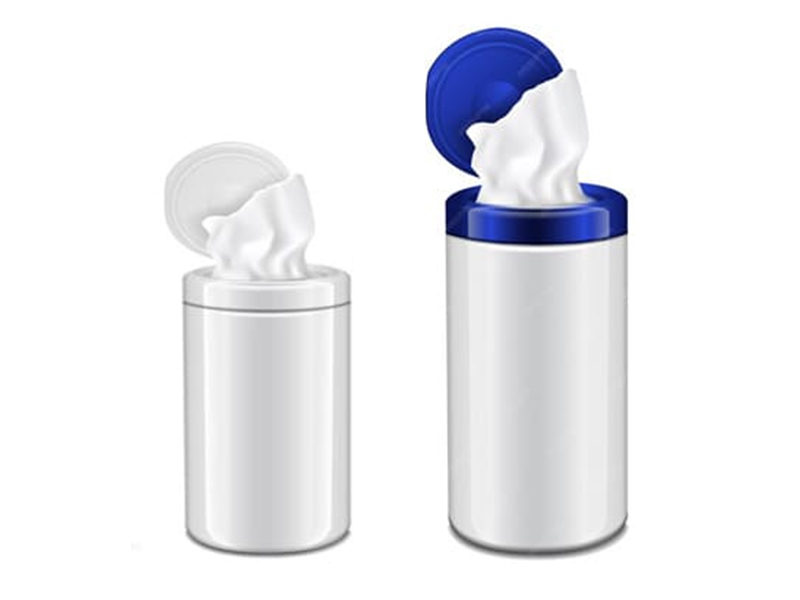 Custom 99% Pure Water Baby WipesFormulated with 99% purified water and soft spunlace, these custom baby wipes are pH-balanced for sensitive skin and everyday cleaning.View Product →
Meltblown and composites take the harder jobs
Meltblown fibres are far finer than carded staple, so the sheet gains opacity, oil pickup and solvent resistance at low weight. Industrial and automotive wipes lean on meltblown or spunbond-meltblown laminates so that a degreaser or paint remover does not strike through within seconds.
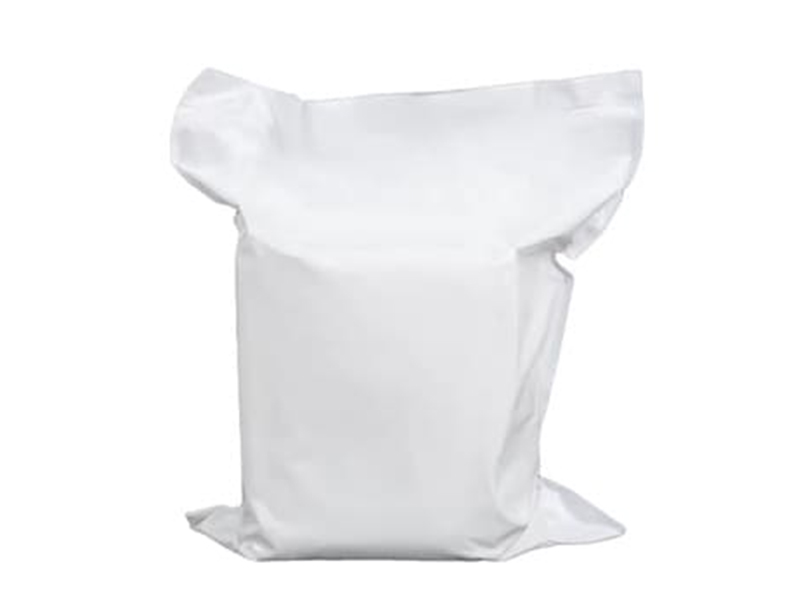 Custom Melt Blown Wet WipesMade with melt-blown fabric, these custom wipes use fine fibers to adsorb dust and oil while staying soft and durable for hands, faces, and screens.View Product →
Substrate grade and lotion chemistry interact more than most specifications admit. For a structured walk-through of grades and their trade-offs, this non-woven fabric guide covering types, manufacturing and buying tips is a useful reference before a sample round begins.
Biodegradability: What Actually Breaks Down
A non-woven biodegrades only if both its fibres and its bonding chemistry do, so any claim printed on the pack has to be traced back to those two decisions.
Polypropylene, the workhorse of the category, does not biodegrade in any realistic timeframe. Viscose, cotton, bamboo and PLA will break down under industrial composting conditions, but a crosslinking binder or a high meltblown share can pull a sheet below the pass threshold of EN 13432 or ASTM D6400. Flushability is a separate test regime again, with its own dispersion criteria.
- Ask for the fibre composition by percentage, not by description.
- Identify the binder system and whether it is crosslinked.
- Request third-party certification numbers rather than logos.
- Check dispersion test data if a flushable claim is planned.
 Custom Bamboo Fiber Wet WipesBiodegradable bamboo fiber wipes offer soft, skin-friendly cleaning for faces, hands, and surfaces without fragrances, alcohol, or fluorescent agents.View Product →
A Sourcing Checklist for Non-Woven Buyers
Write the specification around the failure you cannot afford, not around the lowest price per square metre.
- Fix the claim first: softness, strength, flushability or biodegradability. Each one points to a different substrate.
- Set weight and bonding route together, with a tolerance. Plus or minus five percent on gsm is typical and worth stating in writing.
- Confirm the fibre blend and binder, then check that the lotion does not plasticise or swell either one.
- Collect test data on tensile strength, elongation, absorbency, lint and pH before approving a pilot run.
- Validate packaging compatibility: seal strength, migration and lotion loss over a 24-month shelf life.
Production conditions matter as much as the sheet itself. Wipes converted in a 100,000-class cleanroom with in-line lotion dosing hold tighter microbial control than lines that fill the pack afterwards, and the difference shows up in audit documentation rather than in the sample. The manufacturing process and cleanroom controls are worth reviewing alongside any substrate comparison.
Frequently Asked Questions
Is non-woven fabric a plastic?
It depends entirely on the fibre. Polypropylene and polyester non-wovens are plastics; viscose, cotton, bamboo and PLA non-wovens are cellulose or bio-based. The construction method is identical, the material is not.
Is non-woven stronger than woven fabric?
Not in absolute terms. A woven sheet carries continuous yarns and generally wins on tensile strength and abrasion resistance, while a non-woven trades some of that strength for softness, absorbency and low cost at light weights.
Can non-woven fabric be recycled?
Single-material polypropylene spunbond can be mechanically recycled where collection exists, but most wipes are saturated with lotion and packed in laminate film, which is why the category is treated as residual waste in most markets.
What weight of non-woven is used for wet wipes?
Most consumer wipes run between 40 and 80 gsm. Baby and facial wipes usually sit at 40 to 60 gsm, while industrial and medical wipes move heavier at 60 to 90 gsm to resist solvent and abrasion.
Non-woven is a manufacturing method, not a material, which is why one word covers both a soft baby wipe and an abrasive industrial cloth. Specify the bonding route, the fibre blend and the weight tolerance, and the term stops being a marketing label and becomes something a supplier can actually be held to.

