

 English
 日本語
 Español
 عربى
 Deutsch
 Français
 Personal Wipes
 Baby Wipes
 Health Care & Medical Wipes
 Household Wipes
 Pet Wipes
 Industrial & Automotive Wipes
 Biodegradable Wipes
 Cotton Buds and Pads

Content
Buyers tend to negotiate on formula and count per pack, yet most quality complaints trace back to the substrate, and a large share of the bill of materials sits there too. What follows covers what a non woven textile actually is, how the main bonding routes behave in production, and how to write a substrate specification that survives the first container.
What a Non Woven Textile Is, Stated Plainly
A non woven textile is a sheet or web structure in which fibres or filaments are bonded directly to one another, with no yarns interlaced and no loops knitted. ISO 9092 and EN 29092 define the material the same way: the fibre network carries the load, not a woven architecture.
Most wet wipes use carded staple fibres between roughly 10 and 40 millimetres long, laid into a web and then bonded. Spunbond sheets skip carding entirely and lay continuous filaments straight from the extruder, which is why they become cheaper per square metre as basis weight climbs.
Woven or knitted fabric
- Strength comes from how yarns interlace or loop
- Clear grain direction and predictable drape
- Cut edges fray and need finishing
- Built for washing and repeated use
- Higher cost at very low basis weights
Non woven textile
- Strength comes from bonding inside the fibre web
- Near-isotropic behaviour along and across the sheet
- Cut edges stay stable without finishing
- Produced in one continuous high-speed process
- Engineered for a defined number of uses
That last row drives most sourcing decisions. Because the sheet is built rather than woven, every property has to be designed in, and two suppliers can quote identical gsm and fibre ratio while delivering noticeably different material. Jet density, calendar pressure, binder chemistry and drying profile all shift the result.
Bonding Routes and What They Do to the Sheet
The bonding route shapes hand feel, strength, loft and cost more than the fibre type does. A 50 gsm spunlace and a 50 gsm meltblown sheet can share the same polymer mix and behave nothing alike: water jets produce a soft, draping web that releases liquid quickly, while molten microfibres produce a dense barrier that holds liquid at the surface.
| Spunlace | High pressure water jets entangle and knot the fibre web | Soft, cloth-like, low lint | 30 to 80 gsm | Wet wipes, medical drapes, facial masks |
| Spunbond | Continuous filaments thermally bonded at crossover points | Crisp, strong, low loft | 15 to 150 gsm | Hygiene backsheet, carrier bags, lining |
| Meltblown | Molten polymer drawn into microfibres that self-bond hot | Dense, smooth, low absorbency | 15 to 100 gsm | Filtration media, oil and industrial wipes |
| Airlaid | Wood pulp bonded with latex or a thermal binder | Bulky, highly absorbent | 40 to 200 gsm | Tabletop, food pads, dry wipes |
| Needlepunched | Barbed needles mechanically interlock the web | Thick, felt-like, durable | 100 to 800 gsm | Geotextiles, automotive trim, industrial felt |
Composites do the work single routes cannot. SMS structures stack a meltblown barrier between two spunbond layers, which is how a medical drape combines tear resistance with fluid repellence. A spunlace sheet laminated to meltblown follows the same logic for heavier industrial formats.
Where the task is grease, oil or solvent rather than skin, a melt blown construction usually wins, because the microfiber web lifts contamination into the sheet instead of pushing it across the surface.
 Melt Blown Wet Wipes for Oil, Dust and Screen CleaningCustom melt-blown wipes use fine-fibre webs to lift dust and oil, with optional mild cleaning liquids for hands, surfaces and screens.View Product →
Fibre Blend Decides Absorbency, Feel and Claims
In a wet wipe, the fibre blend decides how much liquid the sheet holds, how quickly it gives that liquid back, and what the pack feels like after two weeks on a shelf. The workhorse is a 50/50 viscose-polyester spunlace: viscose absorbs fast and feels soft on skin, polyester adds wet strength and loft so the sheet does not collapse in the hand. Push to 70/30 and absorbency climbs while wet strength falls, which normally means a heavier sheet to compensate.
- Viscose: fast absorbency, soft hand, plant-based origin, moderate wet strength
- Polyester: high wet strength, holds loft, lower absorbency, mineral origin
- Cotton: softest natural hand, low lint when carded cleanly, highest cost
- Bamboo: good absorbency, strong material story, fibre length varies by supplier
- PLA: compostable under industrial conditions, sensitive to heat in storage
Blend ratios only make sense next to lotion chemistry and pack format, which is why substrate selection for wipes is best handled as one decision rather than three; our guide to non woven fabrics and wet wipe substrate selection walks through the matching process.
Cotton is the blend to choose when the claim is contact with the most sensitive skin and the cost can be defended on the pack.
 Custom Cotton Wet Wipes for Sensitive Skin and Baby CareIndividually wrapped 100% cotton wipes offer gentle, fragrance-free cleaning for faces, hands and babies, with strong absorbency and biodegradable material.View Product →
Where Non Woven Textiles Get Specified
Non woven textiles sit inside hygiene, medical, filtration, automotive, construction and packaging, and each sector judges the sheet against a different test. A hygiene buyer asks about softness and liquid handling; a filtration engineer asks about fibre diameter and pore size; a geotextile specifier asks about tensile strength and UV life.
- Hygiene: wipes, diapers and feminine care, where softness and liquid control lead
- Medical: drapes, gowns and instrument wraps, where barrier performance and bioburden control lead
- Filtration: air and liquid media, where pore structure and pressure drop lead
- Automotive: trim backing, acoustic layers and cabin filters, where heat resistance leads
- Construction: geotextiles and drainage membranes, where strength and durability lead
- Packaging: bags, pouches and labels, where printability and stiffness lead
Production runs from baby and personal care through medical, household, industrial and pet formats, so substrate choice is matched to the application rather than to a single house style; the full wipes range shows how those combinations are grouped.
For packs sold on an environmental claim, bamboo fibre delivers an absorbent sheet with a material story a shopper can repeat.
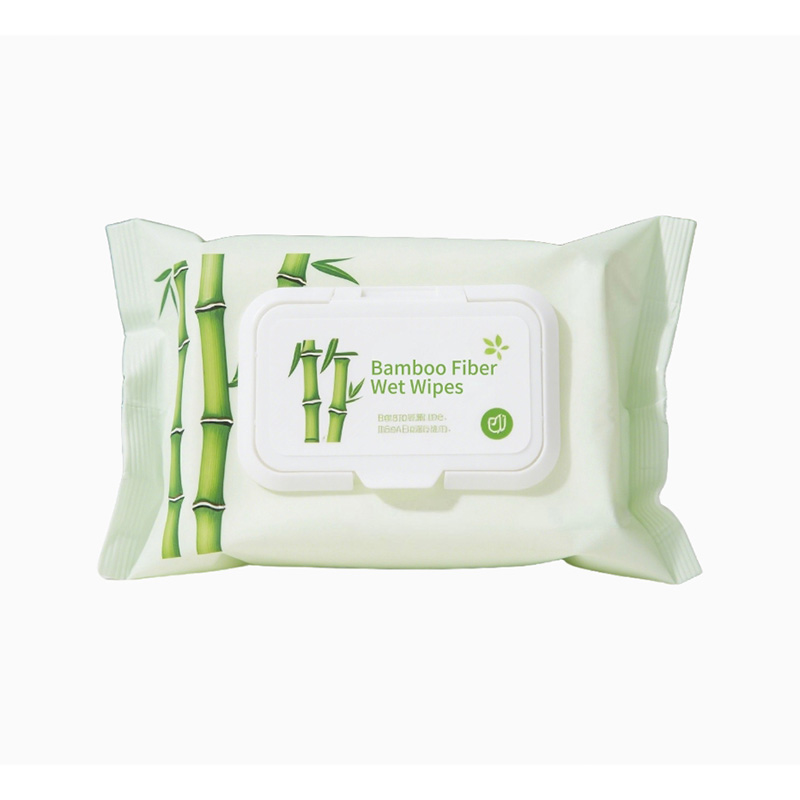 Bamboo Fiber Wet Wipes for Gentle Cleaning and Everyday UseCustom bamboo-fibre wipes combine high absorbency with a soft, biodegradable sheet for face, hand and household cleaning in sealed single packs.View Product →
Specifying a Sheet: A Five-Step Sequence
Start from the failure you cannot accept, then work backwards to bonding route, fibre blend and basis weight. Buyers who begin with a price target usually end up re-specifying after the first production trial.
- Write the use case as one performance sentence. "Removes grease from metal without leaving lint" is a specification; "good quality" is not.
- Fix the bonding route. Spunlace for skin contact, meltblown for solvent and oil, airlaid for bulk absorbency, needlepunch for durability.
- Set basis weight and loft. 40 to 60 gsm covers most baby and personal care wipes; 60 to 80 gsm suits household and industrial formats that get scrubbed.
- Test liquid release, not just absorbency. Strike-through time and vertical wicking tell you how the pack behaves on day one and on day thirty.
- Match documentation to the destination market. Medical claims need ISO 13485 discipline, cosmetic wipes need ISO 22716 and a safety report, flushable claims need dispersion data from a recognised method.
Incoming checks worth writing into the contract
A substrate specification is only useful if it can be measured on arrival. These six checks catch most of the problems that otherwise surface on a packing line.
| Check | Typical target | Why it matters |
| Basis weight | Within 5 percent, measured on a conditioned sample | Drives cost per pack and lotion load |
| MD and CD tensile | Ratio near 1.5 to 1 for most wipes | Prevents tearing on the line and in the pack |
| Strike-through time | Under 3 seconds where fast release is claimed | Controls how wet the top sheet feels |
| Fibre shed and lint | Clean surface after standard abrasion | Protects screens, lenses and instrument surfaces |
| pH of aqueous extract | 5.0 to 8.0 depending on the skin claim | Affects compatibility and long-term stability |
| Bioburden | Set against the cleanroom class in use | Supports any microbiological claim on pack |
Set tolerances before the first purchase order, not after the first rejected container. A supplier that holds a basis weight window of plus or minus 5 percent and a tensile ratio close to 1.5 to 1 is usually holding the rest of the process in line as well.
Frequently Asked Questions
Is non woven fabric recyclable?
Partly. Polypropylene spunbond carries resin code 5 and is accepted in some collection schemes, but blends, wet-strength binders and laminated structures make mechanical recycling impractical. For single-use wipes, dispersion and composting pathways usually matter more than recycling.
What basis weight should a wet wipe use?
Most baby and facial wipes sit between 40 and 60 gsm of spunlace, while household, industrial and medical wipes run from 60 to 80 gsm. Heavier sheets cost more per pack but resist scrubbing and carry more lotion without feeling dry.
Is it non woven or nonwoven?
Both spellings describe the same material. Industry associations tend to write nonwovens as one word, while buyers and specification sheets often keep the two-word form. Neither spelling points to a different manufacturing process.
Can non woven textiles be biodegradable?
Some can. Viscose, cotton, bamboo and PLA fibres break down under the right conditions, while polypropylene does not. A biodegradability claim needs third-party certification and a stated disposal environment, because a fibre that composts industrially may sit unchanged in a landfill.

