

 English
 日本語
日本語 Español
 عربى
عربى Deutsch
 Français
 Personal Wipes
 Baby Wipes
 Health Care & Medical Wipes
 Household Wipes
 Pet Wipes
 Industrial & Automotive Wipes
 Biodegradable Wipes
 Cotton Buds and Pads
Content
- 1 What Makes a Fabric a Non Woven
- 2 Manufacturing: Web Formation First, Bonding Second
- 3 Why Nonwoven Fabrics Suit Wet Wipes So Well
- 4 Melt-Blown and Spunlace: Two Ends of the Wet Wipe Spectrum
- 5 Fiber Choice, Flushability and End-of-Life Claims
- 6 What to Specify Before You Place an Order
- 7 Beyond Wipes: The Wider Nonwoven Fabric Map
- 8 Where the Decision Really Sits
Two wet wipe samples land on the same desk: both labeled 45 gsm spunlace non woven fabric, both from suppliers holding ISO certificates. One survives a dispenser pull and a month in a warm warehouse; the other tears along the perforation. Neither label was wrong. Non woven fabrics are a family of bonded fiber webs, and four variables decide how a given roll behaves: fiber type, web formation, bonding method, and lot-to-lot control of basis weight.
So treat the fabric as an engineered component rather than a commodity roll. Ask which fiber is inside, how the web is bonded, what wet tensile looks like in your own lotion, and where the material ends up after disposal. The sections below explain the reasoning behind each question, with the numbers buyers usually need.
What Makes a Fabric a Non Woven
Non woven fabric is defined by what it skips. Staple fibers or continuous filaments are laid into a web and then bonded, whether by mechanical entanglement, thermal fusion, or chemical adhesion. No yarn is spun, and no loom or knitting machine is involved. INDA, the Association of the Nonwoven Fabrics Industry, describes the category as sheet or web structures bonded together by entangling fibers or filaments, a definition that also covers the perforated films used in some hygiene products.
Two consequences matter for buyers. Nonwovens do not unravel or fray when cut, which is why they run cleanly on high-speed converting lines. And because strength comes from bonding rather than interlaced yarns, properties are directional: machine-direction tensile is normally higher than cross-direction tensile, so a complete specification states both.
| Fabric type | How it is built | Strength pattern | Edge behavior | Typical disposable use |
|---|---|---|---|---|
| Woven | Warp and weft yarns interlaced | High in two directions, weak on the bias | Frays when cut | Reusable cloths, cotton pads |
| Knitted | Loops interlocked in columns | Stretchy and direction dependent | Can curl or unravel | Reusable wipes, apparel |
| Nonwoven | Fibers or filaments bonded directly | Set by fiber orientation and bonding | Cuts cleanly, minimal fraying | Disposable wipes, medical drapes |
Manufacturing: Web Formation First, Bonding Second
Production happens in two stages, and buyers who understand both stop arguing about the wrong one. Stage one forms the web: carding aligns staple fibers, airlaid systems deposit short fibers with an air stream, spunbond extrudes continuous filaments, and meltblown draws fine filaments with hot air. Stage two bonds the web: hydroentanglement uses high-pressure water jets, thermal calendering fuses fiber surfaces at a patterned roll, chemical binders glue fibers at contact points, and needlepunch drives barbed needles through the batt. The pairing sets the feel, the pore size, and the wet strength.
| Process | Web formation | Bonding | Typical basis weight | Character and common use |
|---|---|---|---|---|
| Spunbond | Continuous filaments extruded and laid | Thermal calender or needle | 10 to 150 gsm | Strong, porous, economical; diaper topsheets, gowns, bags |
| Melt-blown | Fine filaments drawn by hot air | Self-bonding during laydown | 15 to 100 gsm | Fine pores, barrier properties, lower tensile; filtration, industrial wipes |
| Spunlace | Carded staple fiber web | High-pressure water jets | 30 to 90 gsm | Soft, drapable, low lint, high wet strength; wet wipes, medical wipes |
| Airlaid | Short fibers carried by air | Latex or thermal bonding | 40 to 200 gsm | Bulky and absorbent; hygiene cores, tabletop wipes |
| Needlepunch | Carded or cross-lapped web | Barbed needles | 80 to 800 gsm | Thick and durable; geotextiles, automotive trim, felt |
Why Nonwoven Fabrics Suit Wet Wipes So Well
A wipe works only when substrate and liquid behave as one system. Nonwovens earned their place in that system through a short list of properties:
- Liquid handling: an open, tortuous pore network holds lotion and releases it on contact.
- Wet strength: hydroentangled webs keep most of their dry tensile strength when saturated, so a wipe does not shred mid-use.
- Low lint: bonded fibers shed far fewer particles than carded cloth, which matters in cleanrooms and electronics assembly.
- Softness and drape: spunlace webs flex with the hand instead of creasing like paper.
- Chemical tolerance: polypropylene and viscose hold up against alcohol, isopropanol and quaternary ammonium compounds at wipe concentrations.
- Converting stability: consistent thickness and clean edges allow folding, stacking and perforation at speed.
Not every product needs the same substrate. Baby and personal care wipes favor a soft 40 to 60 gsm hydroentangled web, while industrial and medical items often use heavier or laminated constructions where solvent resistance, particle capture or bioburden control dominate. On medical lines, extractables, bioburden limits and traceability join the specification, and production in a controlled cleanroom under ISO 13485 and GMPC is often a tender requirement rather than a bonus. Manufacturers running health care and medical wipe lines alongside consumer products usually document how those two worlds stay separated.
Viscose spunlace remains the workhorse of the category: it absorbs quickly, feels soft on skin, and balances cost against biodegradability. It is also the substrate most often imitated by blended webs that swap part of the viscose for polyester to cut cost.
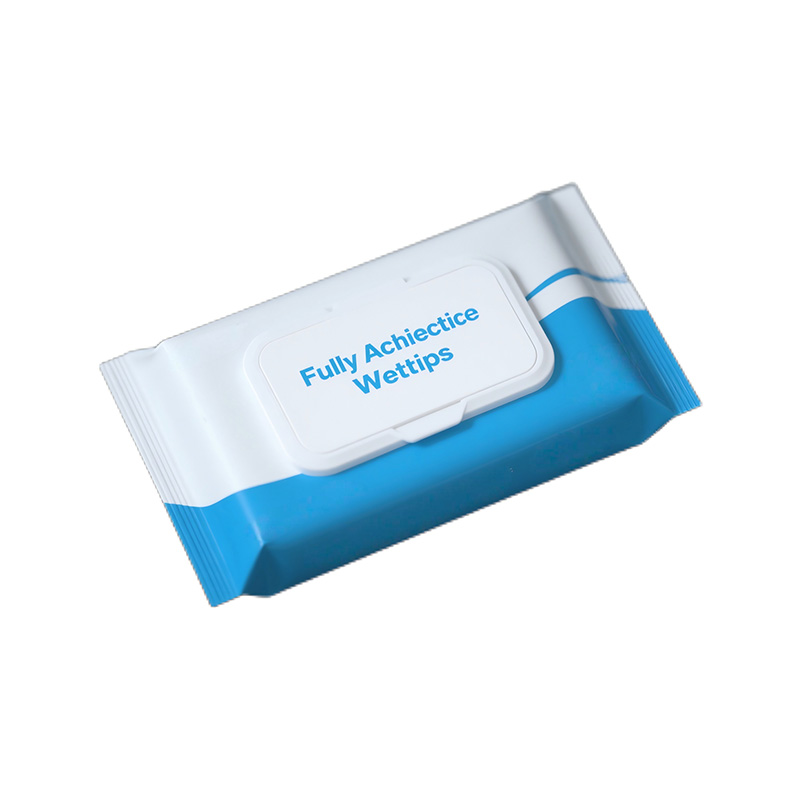 Fully Adhesive Wet Wipes1. Strong adhesion 2. No liquid added 3. Clean and residue-free 4. Multi-purpose 5. Portable and easy to use 6. Environmentally friendly and safeView Product →
Melt-Blown and Spunlace: Two Ends of the Wet Wipe Spectrum
Melt-blown and spunlace sit at opposite ends of the same family, and confusing them causes real procurement mistakes. Melt-blown webs are built from filaments drawn to roughly 0.5 to 5 micrometers and bonded by residual heat. The result is a dense, fine-pored material with excellent barrier behavior but modest tensile strength, which is why it appears in filtration media, absorbent pads and industrial wipe substrates where solvent resistance and particle capture matter more than softness.
Spunlace webs start with staple fibers, often 12 to 20 micrometers across, entangled by water jets. Fiber-to-fiber friction does the bonding work, so the fabric stays soft, low-linting and strong in both directions. A side-by-side look at melt-blown and spunlace wet wipe substrates shows the two are complementary rather than competing: SMS laminates pair a melt-blown barrier layer with spunbond outer layers, and some industrial wipes combine a melt-blown core with a softer facing.
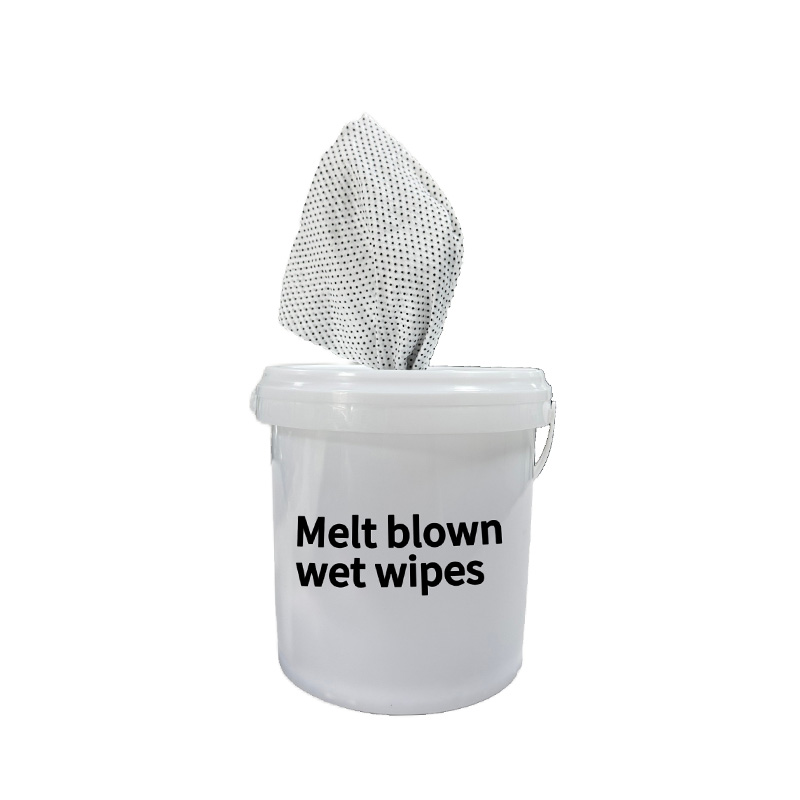 Melt Blown Wet Wipes2. Powerful cleaning abilityView Product →
Fiber Choice, Flushability and End-of-Life Claims
The fiber decides far more than price. Viscose and cotton disperse and biodegrade relatively quickly in wastewater; bamboo and lyocell follow similar pathways; polypropylene and polyester persist for decades. That difference explains why two wipes with identical basis weight and identical softness can carry completely different disposal claims.
Flushability is a separate question from biodegradability. The INDA and EDANA flushability guidelines, now in their fourth edition, test a wipe against criteria covering dispersion, drain-line clearance and settling behavior. A product that fails those tests should carry a do-not-flush instruction, whatever fiber it contains. Biodegradability claims also need a defined environment and timeframe, because a web that breaks down in industrial composting may sit unchanged in a landfill.
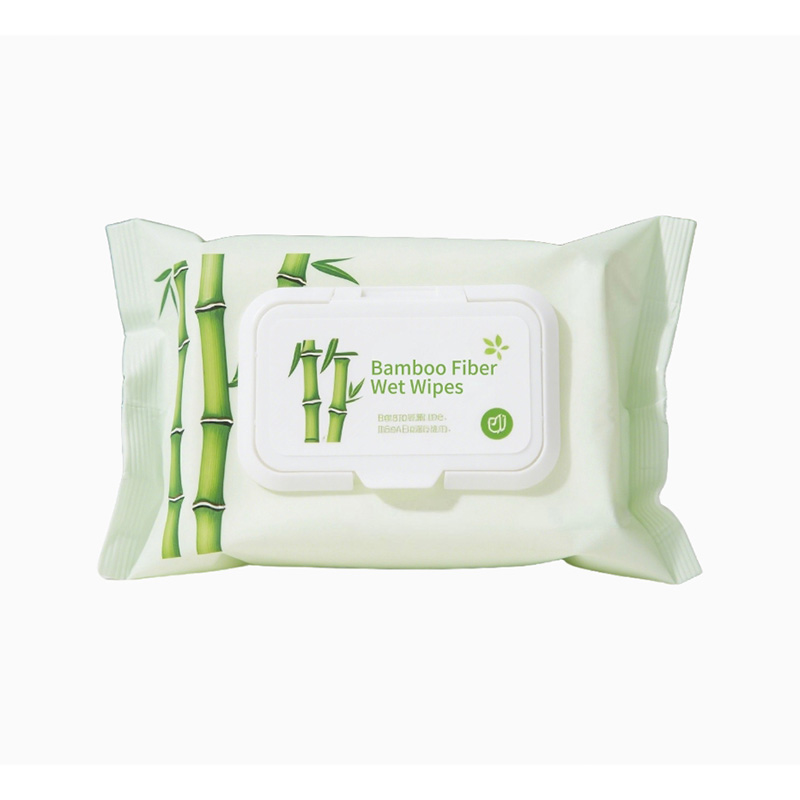 Bamboo Fiber Wet Wipes1. Natural antibacterial properties 2. Superb water absorption 3. Ultra-soft and skin-friendly 4. Environmentally friendly and biodegradable 5. Multi-purpose functiona...View Product →
What to Specify Before You Place an Order
A substrate specification that survives an audit covers the fabric, the wet state and the disposal route. The table below lists the parameters that most often decide whether a shipment is accepted.
| Parameter | How it is checked | What to write in the spec |
|---|---|---|
| Fiber composition | Supplier declaration, verified by FTIR | Name the blend, for example 100 percent viscose or 50/50 viscose and polyester |
| Basis weight | Gravimetric, conditioned sample | 45 gsm ±5 percent, with the conditioning state stated |
| Tensile strength | Strip test, dry and saturated | Machine and cross direction reported separately; wet value at least 60 percent of dry for spunlace |
| Absorbency | Immersion pickup or wicking rate | Measure with the finished lotion, not with water |
| Lint and particles | Gravimetric or particle count | Limit set by the cleanroom class of the filling line |
| Extractables and pH | Aqueous extract | pH inside product range, typically 4.5 to 7.5 for skin contact wipes |
| Bioburden | Enumeration using ISO 11737 style methods | Required when medical claims and ISO 13485 apply |
| Dispersibility | INDA and EDANA flushability tests | Claim flushable only when the fabric passes the full suite |
Four procurement risks appear again and again in wipe programs:
- Fiber substitution: a blend can drift from viscose to polyester without changing the phrase nonwoven fabric on the label, shifting absorbency, hand feel and biodegradation at once.
- Conditioning games: basis weight taken on a conditioned sample includes moisture regain, so state whether the figure is dry or conditioned.
- Wet tensile measured in water: water is not your lotion. Surfactants, alcohol and preservatives change how the web behaves, so test with the finished formulation.
- Width and edge tolerance: a few millimeters of roll width drift shows up as poor folding and seal failures, not as a visible defect in the fabric.
Beyond Wipes: The Wider Nonwoven Fabric Map
Wipes are only one outlet for these materials, and the same substrate logic applies elsewhere:
- Medical: surgical gowns, drapes, masks and instrument wraps.
- Filtration: air, oil and liquid media, frequently melt-blown.
- Hygiene: diaper topsheets, acquisition layers and feminine care covers.
- Geotextiles and construction: separation, drainage and reinforcement layers.
- Automotive and industrial: acoustic insulation, battery separators, polishing pads.
- Packaging and retail: reusable bags, mailing envelopes, agricultural covers.
Where the Decision Really Sits
Non woven fabrics reward buyers who settle four questions before price: which fiber, which bonding route, which wet-state performance in my lotion, and which disposal route the market will accept. Get written answers, verify them with a production lot rather than a lab sample, and file the data sheet next to your incoming inspection record. That habit is usually the difference between a wipe that survives the dispenser and a claim you have to defend later.

