

 English
 日本語
日本語 Español
 عربى
عربى Deutsch
 Français
 Personal Wipes
 Baby Wipes
 Health Care & Medical Wipes
 Household Wipes
 Pet Wipes
 Industrial & Automotive Wipes
 Biodegradable Wipes
 Cotton Buds and Pads
Content
- 1 What Is Non-Woven Fabric, Exactly?
- 2 How Non-Woven Fabric Is Made: A Two-Step Process
- 3 Woven vs Non-Woven Fabric: Where Each Wins
- 4 The Fibers Inside: From Polypropylene to Bamboo
- 5 Reading the Spec Sheet: GSM, Apertures, and Wet Strength
- 6 Where Non-Wovens Show Up
- 7 What Buyers Should Verify Before Committing
- 8 The Bottom Line
Pull a baby wipe out of the pack, stretch it gently, and hold it up to the light: the faint diamond pattern you see is not made of woven thread. The same is true of the surgical drape in an operating room, the filter media inside a vacuum cleaner, and the crop cover stretched over a strawberry field. All of them are non-woven fabric. In plain terms, non-woven fabric is a fabric-like sheet made by bonding fibers together through mechanical entanglement, heat, or chemical binders — no weaving and no knitting involved. That single difference explains why it can run off production lines at hundreds of meters per minute, why it can be engineered around a specific liquid or filtration task, and why it dominates single-use hygiene products. For anyone sourcing wet wipes, this is not academic: the substrate decides softness, wet strength, absorbency, and a large share of the unit cost.
What Is Non-Woven Fabric, Exactly?
The short answer: a non-woven is an engineered sheet or web of fibers — short staples or continuous filaments — bonded by friction, cohesion, or adhesion, explicitly excluding weaving, knitting, and papermaking.
That is essentially how industry bodies such as EDANA and the relevant ISO definitions frame it. Two practical points hide inside the wording. First, the fibers are flexible: polypropylene, polyester, viscose, cotton, and bamboo can all be used, alone or blended. Second, the fabric is engineered — the fiber mix, web structure, and bonding method are selected to hit a target. A 40 GSM baby wipe and a 400 GSM geotextile are both non-wovens, yet they behave nothing alike.
Non-wovens sit between paper and traditional textiles. They are generally softer and stronger than paper, far faster and cheaper to produce than woven cloth, and naturally porous — exactly the property a wipe, a filter, or a face mask depends on.
How Non-Woven Fabric Is Made: A Two-Step Process
Every non-woven, whatever its end use, follows the same logic: form a web of fibers, then bond that web together.
Step 1: Laying the Fiber Web
Four routes are common. Dry-laid (carded) lines comb staple fibers such as viscose and polyester into a uniform web — the standard route for spunlace wipes. Air-laid processes suspend wood pulp fibers in an airflow and deposit them on a moving screen, producing bulky, highly absorbent material. Polymer-laid routes skip the fiber stage entirely: spunbond lines extrude continuous polypropylene filaments and lay them down while still hot, while melt-blown lines blast the molten polymer with hot air to create microfibers with outstanding filtration and oil-absorption performance.
Step 2: Bonding the Web
Bonding decides how the fabric behaves in the hand. Hydroentanglement — sold under the name spunlace — fires fine, high-pressure water jets through the web so fibers knot around one another. Because no glue is involved, the fabric stays soft, absorbent, and low-lint, which is why premium baby, cosmetic, and medical wipes are almost always spunlace. Thermal calendering squeezes the web between heated rollers so fibers fuse at contact points, yielding the light, strong, dot-patterned fabric in masks and packaging. Chemical bonding saturates the web with a latex or acrylic binder for economical, stable fabrics, while needle punching uses barbed needles to felt thick, dense fabrics for geotextiles and automotive liners.
Melt-blown and spunlace webs differ sharply in wet behavior and cost structure, which is why buyers frequently weigh one against the other; our article on how melt-blown wipes compare to spunlace wipes covers that decision in detail.
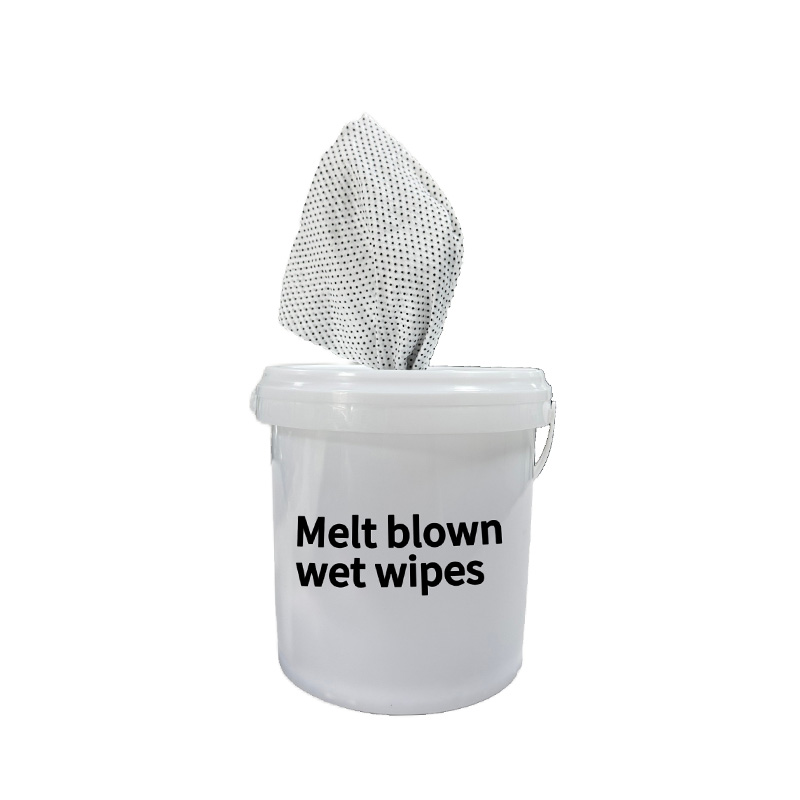 Melt Blown Wet Wipes for CleaningMade from melt-blown fabric with a fine fiber structure, these wipes offer strong adsorption of dust, oil and grime while staying tough and lint-free. They suit the article's comparison with spunlace on wet behavior and cost.View Product →
Woven vs Non-Woven Fabric: Where Each Wins
Non-wovens are not simply cheaper textiles; they belong to a different engineering category. The comparison below shows where the trade-offs fall.
| Aspect | Woven Fabric | Non-Woven Fabric |
|---|---|---|
| How it is formed | Warp and weft yarns interlaced on a loom | Fibers laid into a web, then bonded mechanically, thermally, or chemically |
| Strength behavior | Strong along the grain, weaker off-grain | Nearly isotropic; strength engineered without a grain direction |
| Speed and cost | Slow loom speeds; higher cost per square meter | Hundreds of meters per minute; low cost per square meter |
| Working life | Durable, washable, reusable | Usually single-use, matched to one task |
| Typical examples | Shirting, denim, upholstery | Wet wipes, face masks, filters, geotextiles, surgical drapes |
The Fibers Inside: From Polypropylene to Bamboo
The fiber chosen for the web shapes everything downstream:
- Polypropylene (PP): the workhorse of spunbond fabric — cheap, strong, and hydrophobic, so it resists water rather than absorbing it.
- Polyester (PET): dimensionally stable and heat tolerant, common in industrial and automotive non-wovens.
- Viscose (rayon): regenerated cellulose from wood pulp; absorbs water readily and feels soft, forming the backbone of most spunlace wipe blends.
- Cotton: natural, skin friendly, and fully biodegradable; it raises cost but elevates the feel of premium wipes.
- Bamboo fiber: cellulose derived from a fast-growing renewable source, valued for softness and a lower-impact story.
In practice, most wipes use blends — for example 70% viscose with 30% polyester — pairing the absorbency of cellulose with the wet strength of a synthetic fiber. Fully plant-based options such as bamboo-fiber and cotton wipes appeal to buyers whose markets increasingly ask for biodegradability, not just performance.
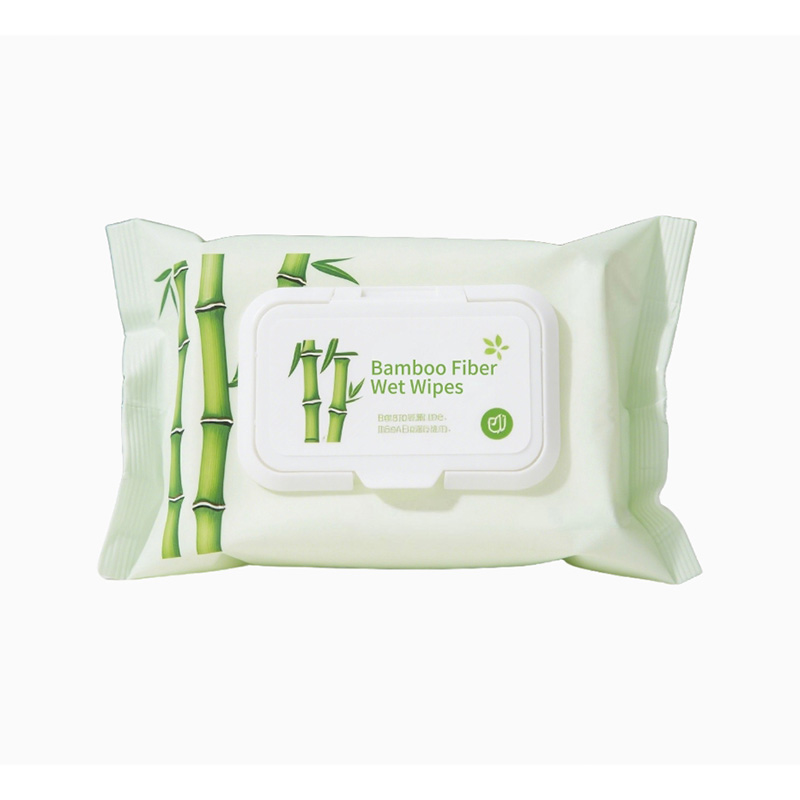 Biodegradable Bamboo Fiber Wet WipesMade from natural bamboo fiber, these wipes combine natural antibacterial properties, high absorbency and soft skin-friendly texture. They fit the article's point that buyers seeking biodegradable substrates look beyond viscose-polyester blends.View Product →
Reading the Spec Sheet: GSM, Apertures, and Wet Strength
When a supplier quotes a wipe, three substrate parameters do most of the talking:
- Basis weight (GSM): wet wipes commonly run from about 35 GSM for light personal-care formats to 60 GSM and above for heavy-duty industrial use. A thicker web costs more per wipe but survives harder scrubbing without tearing; reputable lines hold GSM tolerance within roughly ±5%.
- Aperture and embossing: plain surfaces suit delicate skin contact, while pearl or honeycomb embossing creates pockets that trap dirt, makeup, and grease — a real advantage for household and automotive cleaning.
- Wet strength and linting: the fabric must hold together when saturated and resist shedding fibers onto skin, glass, or screens, where spunlace consistently beats binder-bonded webs.
Substrate and formula also have to match. A 99% pure water baby wipe leans heavily on a high-absorbency spunlace web, because the liquid itself contributes no solvents or surfactants to do the cleaning work.
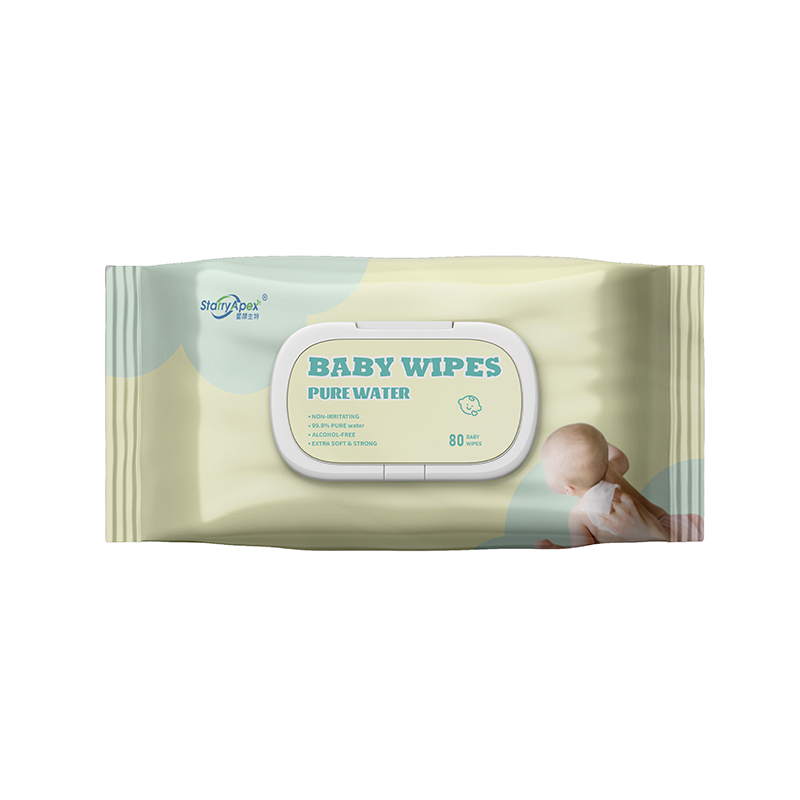 99% Pure Water Baby WipesComposed of 99% purified water with no alcohol or fragrance, these mild pH-balanced wipes suit sensitive baby skin. They illustrate how a minimal formula depends on a high-absorbency spunlace substrate for cleaning performance.View Product →
Where Non-Wovens Show Up
The list is longer than most people expect:
- Hygiene and wipes: baby wipes, disinfecting wipes, feminine care, incontinence products, diapers.
- Medical: surgical gowns, drapes, face masks (often SMS — a spunbond–melt-blown–spunbond sandwich), wound dressings.
- Filtration: HVAC media, respirator layers, vacuum bags, liquid cartridges.
- Geotextiles: roadbed separation, soil stabilization, erosion control.
- Agriculture: crop covers, seed blankets, capillary mats.
- Automotive and home: trunk liners, headliner backing, cabin filters, dust cloths.
In several of these categories, non-wovens are not an alternative to woven cloth — they are the only practical material for the job.
What Buyers Should Verify Before Committing
For procurement teams, the substrate conversation is also a supplier conversation. Four checks separate reliable wipes partners from risky ones:
- Cleanroom discipline: wipes are saturated products, so production in a 100,000-class cleanroom with medical-grade hygiene controls sharply reduces bioburden risk.
- Certification depth: ISO 9001 covers general quality, ISO 22716 and GMPC cover cosmetics GMP, FDA registration matters for US-bound goods, and ISO 13485 signals medical-device capability.
- Substrate customization: the ability to specify GSM, fiber blend ratio, embossing pattern, and roll width — not just choose from a fixed catalog.
- Substantiated eco claims: biodegradability should reference recognized standards such as EN 13432 or ASTM D6400 rather than marketing adjectives.
Working with a manufacturer that covers these points end to end shortens development cycles considerably; StarryApex's full product and certification overview is a practical starting point for comparing capabilities.
The Bottom Line
Non-woven fabric is best understood as engineered fiber architecture rather than cloth: fibers are laid into a web by carding, air laying, or polymer extrusion, then bonded with water jets, heat, binders, or needles. Every choice along that chain — fiber type, web formation, bonding method, basis weight — shifts the material's softness, strength, absorbency, and end-of-life profile. That is why two wipes that look identical on a shelf can behave entirely differently in the hand. For brands and buyers, specifying the substrate with the same rigor as the liquid formula is the single most effective way to control performance and cost.

