

 English
 日本語
日本語 Español
 عربى
عربى Deutsch
 Français
 Personal Wipes
 Baby Wipes
 Health Care & Medical Wipes
 Household Wipes
 Pet Wipes
 Industrial & Automotive Wipes
 Biodegradable Wipes
 Cotton Buds and Pads
Content
When you handle nonwoven fabric for the first time, the label itself can be misleading. It looks and feels like cloth, but it is not woven or knitted. Nonwoven fabric is an engineered sheet made by bonding fibers mechanically, thermally, or chemically. That distinction is not a matter of terminology. It determines how a material absorbs liquid, how much it resists tearing, and whether it will perform in a finished wipe. For anyone sourcing wipes, hygiene products, or industrial cleaning rolls, understanding nonwoven fabric is the quickest way to avoid specification mistakes and costly rework.
What Is Nonwoven Fabric?
Nonwoven fabric is defined by its production route rather than by its fiber content. It can be made from short staple fibers such as cotton, viscose, or bamboo, or from continuous filaments extruded from polymers like polypropylene and polyester. The fibers are laid into a web, and the web is bonded by water jets, heat, chemicals, or mechanical needling. The result is a flexible sheet material engineered for a specific purpose.
Because the web can be engineered, a manufacturer can adjust softness, strength, absorbency, and thickness without changing the fiber family. That is why nonwoven fabric appears in wet wipes, surgical gowns, filtration media, automotive interior linings, protective apparel, and countless disposable hygiene products. The same principle applies whether the end product is a baby wipe or an industrial cleaning cloth.
How Nonwoven Fabric Is Made
Nonwoven production involves two stages: forming the fiber web and bonding it. The bonding method matters most because it determines whether the sheet behaves like paper, like cloth, or like a filter medium. In the wipes industry, three processes dominate: spunlace, spunbond, and melt-blown.
| Process | Bonding principle | Typical basis weight | Common applications |
|---|---|---|---|
| Spunlace (hydroentanglement) | High-pressure water jets entangle fibers | 30-80 gsm | Wet wipes, baby wipes, medical nonwovens |
| Spunbond | Continuous filaments are laid and thermally or chemically bonded | 10-150 gsm | Disposable gowns, packaging, agricultural covers |
| Melt-blown | Melt-blown microfibers form a fine, dense web | 15-200 gsm | Filtration, absorbent cores, oil wipes |
| Thermal bonding | Heat fuses thermoplastic fibers into a lofty structure | 30-120 gsm | Cushioning, insulation, cosmetic pads |
Spunlace uses high-pressure water jets to entangle fibers, producing a cloth-like texture and high wet strength without chemical binders. Spunbond extrudes continuous filaments and bonds them into a durable sheet that is fast to produce, though it can feel stiffer. Melt-blown draws melted polymer into microfibers, creating a dense web with a very large surface area that is excellent for absorbing oil and trapping dust.
Many wipes combine these processes. For example, melt-blown layers are often paired with spunbond or spunlace layers to balance adsorption with strength. We have covered how melt-blown compares with spunlace in a separate article, and the practical conclusion is that neither process wins on every criterion: melt-blown adsorbs better, while spunlace feels softer and resists tearing better.
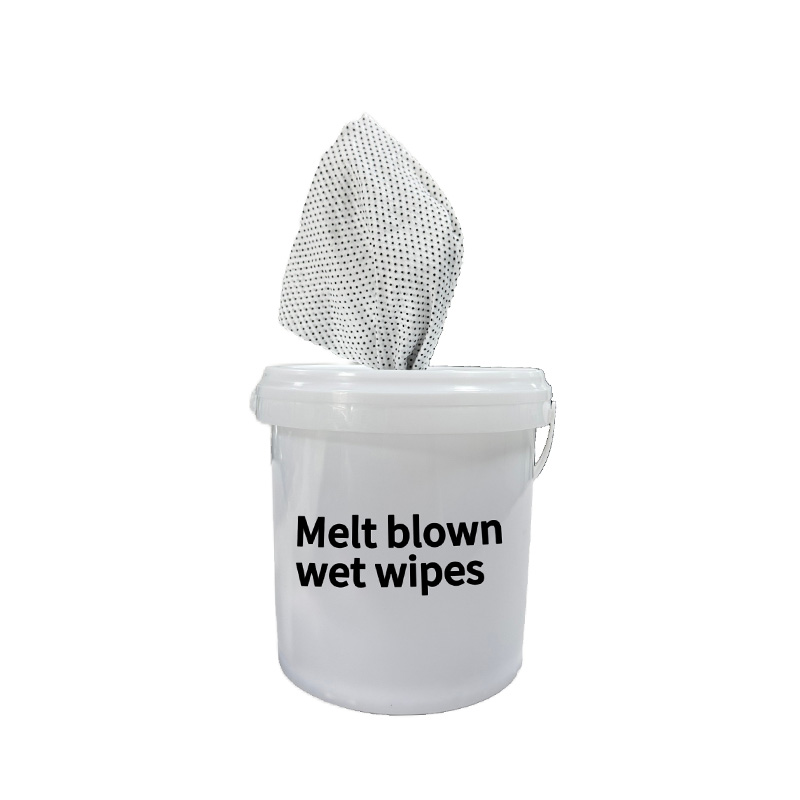 Melt-Blown Wet Wipes for Adsorption and StrengthThis wipe uses melt-blown fabric to pick up oil, grease, and fine particles while adding toughness. It suits cleaning tasks that need high adsorption without tearing, making it a practical choice when standard spunlace falls short.View Product →
The melt-blown structure is especially useful for cleaning products that must pick up oil, grease, and fine particles while remaining stable in the hand. Buyers who expect one nonwoven fabric to suit every application will overpay in some cases and underperform in others. Defining the end use first is the fastest way to select the right process.
Key Characteristics of Nonwoven Fabric for Wipes
For wipes, the most important properties are absorbency, wet strength, softness, and lint resistance. A wipe must pick up liquid quickly and release it across the surface without shredding. But these properties are connected. A highly absorbent fabric may become weak once saturated, while a strong fabric may feel coarse on sensitive skin.
| Property | Spunlace | Spunbond | Melt-blown |
|---|---|---|---|
| Hand feel | Soft, cloth-like | Stiffer, paper-like | Smooth, fine |
| Wet strength | High | Moderate to high | Low to moderate |
| Absorbency | High | Moderate | Very high for oils |
| Lint release | Low | Low to moderate | Low |
These ranges are not absolute. Fiber denier, polymer type, and bonding energy can shift the numbers. A high-GSM spunlace material, for instance, will hold more water than ordinary melt-blown, while a melt-blown fabric will outperform both on oil adsorption. That is why an experienced supplier asks about your application before quoting a price per ton.
Basis weight remains the most common purchasing specification, but it tells only half of the story. A 40 gsm spunlace sheet can feel and perform completely differently from a 40 gsm thermal-bonded sheet. For cleanup, a wipe with a basis weight that is too low will disintegrate during use. For baby care, a wipe with a basis weight that is too high may be unnecessarily expensive. Setting a realistic target range based on the task is the professional approach.
How the Base Sheet Affects Wipe Performance
Manufacturers formulate the liquid and the substrate separately, but the two interact in the finished product. A disinfectant wipe must hold enough alcohol to kill germs, and the base sheet must resist the chemical without shedding fibers. A baby wipe must remain soft after saturation while releasing liquid gradually. A floor cleaning wipe must stay intact while being pulled across a rough surface.
When selecting nonwoven fabric for a wet wipe, buyers should ask three questions. First, does the sheet maintain its strength when saturated with the intended liquid? Second, does it leave lint or particles on the surface being cleaned? Third, does its softness match the end user's expectation? The answers will vary from product to product.
Health, Safety, and Compliance Considerations
Regulatory compliance starts with raw materials. Nonwoven fabrics intended for skin contact should not contain formaldehyde, fluorescent brighteners, or residual solvents. In medical and hygiene applications, manufacturers must also control microbial counts, pH, and additive migration. Certificates such as ISO 9001, ISO 22716, GMPC, and ISO 13485 matter because they indicate that the supplier follows a quality system that can be audited, not because they are decorative seals.
In the production environment, resin dust and adhesive volatiles associated with some nonwoven processes must be controlled through proper ventilation and protective equipment. This is part of worker safety oversight that reliable suppliers take seriously.
For disinfecting wipes, compatibility between the substrate and the disinfectant is critical. Alcohol, isopropyl alcohol, and chlorhexidine formulas challenge the base sheet in different ways. If the nonwoven fabric loses too much strength when wet, the wipe can tear, leave fibers, and fail to deliver the required disinfection. This is why our production line pairs each liquid formula with a substrate that has already passed wet-strength tests under the same conditions.
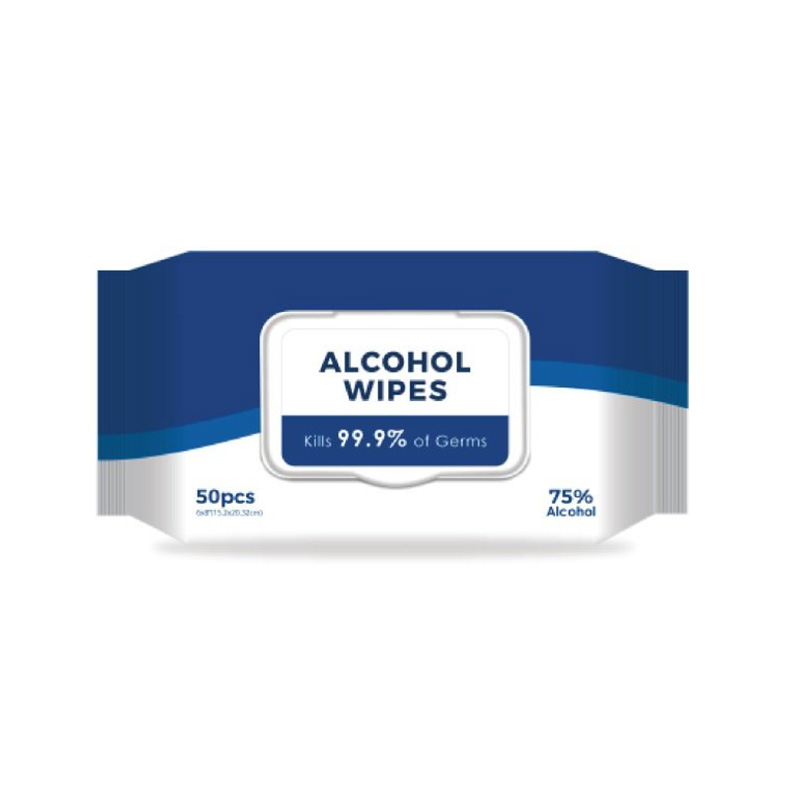 Alcohol Wipes with 75% Disinfecting FormulaThese wipes combine nonwoven carrier with about 75% alcohol for rapid disinfection against common bacteria and viruses. Wet-strength compatibility ensures they hold up during use, ideal for sanitizing hands, screens, and high-touch surfaces.View Product →
Buyers should also request documentation that confirms raw material traceability, migration limits, and stability under storage. A reliable supplier retains production records for each batch and can trace the material back to the fiber supplier when questions arise.
Sustainability and the Shift to Renewable Fibers
The main criticism against nonwoven fabric is that most single-use wipes are made from synthetic fibers that degrade slowly in landfills. In response, the industry is moving toward renewable feedstocks such as cotton, bamboo, and wood pulp. These fibers are processed through the same nonwoven technologies, including spunlace and thermal bonding, and can meet the strength and absorbency requirements of everyday wipes.
Biodegradability depends on both the fiber and the bonding route. Binder-free spunlace fabrics made from plant fibers decompose faster than synthetic polymer blends. However, buyers should not rely on general claims. Request test reports for biodegradability, check the fiber source, and confirm whether the finished product includes any synthetic components that could slow down degradation.
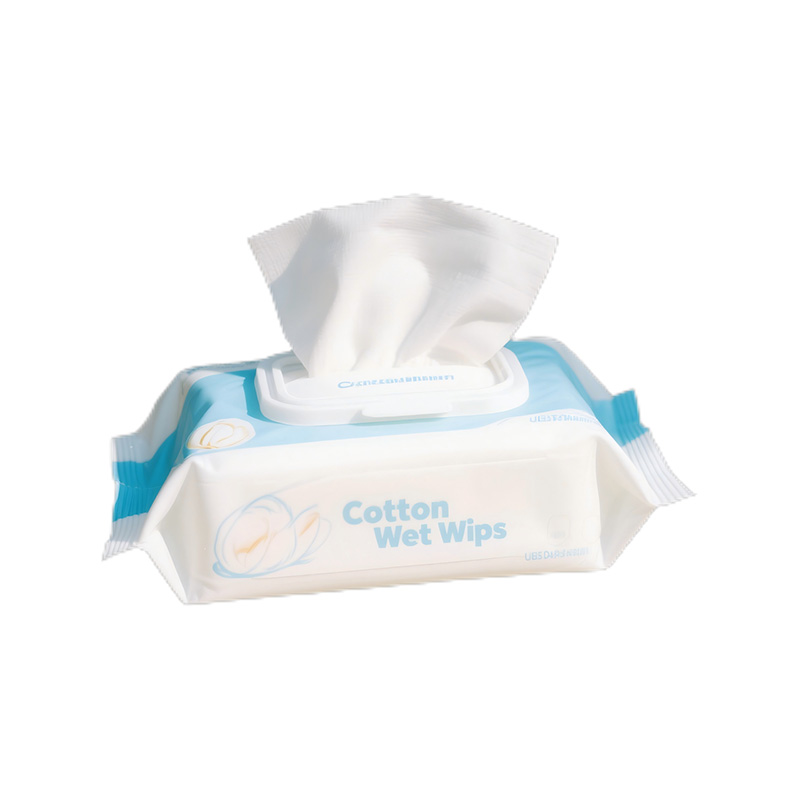 Biodegradable Pure Cotton Wet WipesMade from 100% cotton without additives, these wipes are soft, absorbent, and individually packed. Their biodegradable composition addresses environmental requirements, making them suitable for sensitive skin and institutional buyers seeking sustainable options.View Product →
For manufacturers, environmental performance is becoming a requirement in tender documents, especially for retail and institutional buyers in Europe and North America. Choosing the right fabric early helps avoid last-minute substitutions that create quality problems.
Practical Buying Guide for Nonwoven Fabric
When comparing quotes from suppliers, use a structured list rather than relying only on basis weight and price. The following points cover the key variables:
- Define the end use: baby care, general cleaning, disinfection, pet care, or automotive maintenance.
- Set a target basis weight and confirm the tolerance with the supplier.
- Choose the fiber type based on absorption, chemical resistance, and skin compatibility.
- Test wet strength and lint release using the same liquid formula you intend to use in production.
- Check that the substrate is compatible with your preservative system and packaging process.
- Audit the supplier's production environment, purification level, and documentation.
- Demand full certificates and raw material traceability before signing a volume order.
Standard roll widths and conversion steps should also be agreed upon. Some wipes are folded and stacked into tubs, while others are packaged in flow packs; the nonwoven sheet must perform consistently through the converting line. If a supplier can produce the finished wipes as well as the base material, coordination becomes simpler because well-defined quality controls exist on both sides.
Nonwoven fabric is not a single material. It is a family of engineered sheets that respond to how they are formed, bonded, and finished. The right choice emerges when material properties are matched with the end use, the liquid formula, the regulatory environment, and the budget. Suppliers that understand both nonwoven substrates and finished wipes can reduce development time and prevent problems that only show up after the product reaches the market.

