

 English
 日本語
日本語 Español
 عربى
عربى Deutsch
 Français
 Personal Wipes
 Baby Wipes
 Health Care & Medical Wipes
 Household Wipes
 Pet Wipes
 Industrial & Automotive Wipes
 Biodegradable Wipes
 Cotton Buds and Pads
Content
A single disposable diaper holds roughly 12 to 15 grams of superabsorbent polymer, about a tablespoon of white granules that can soak up 300 times their own weight in saline. That material, usually shortened to SAP, keeps skin dry for hours, holds fluid inside adult incontinence pads and wound dressings, and now appears in food transport pads, agricultural soil additives and industrial water-blocking tape. Knowing what SAP polymers are, how they behave in real fluids and how to specify them is what separates an absorbent product that performs from one that leaks.
This guide covers the chemistry, the manufacturing routes and the purchasing checks that matter when SAP sits inside a product you sell.
What SAP Polymers Are
Superabsorbent polymers are lightly cross-linked hydrophilic polymer networks that absorb and retain hundreds of times their own weight in aqueous fluid while staying insoluble.
A SAP is a three-dimensional network of long polymer chains, most often built from partially neutralized acrylic acid, joined at intervals by covalent cross-links. Water is drawn in by osmosis and held by hydrogen bonding, but the cross-links stop the chains from separating, so the granule swells into a gel instead of dissolving into liquid. On purchase orders and technical data sheets the same material also appears as slush powder, SAM, or sodium polyacrylate.
Two numbers decide how a grade performs in a finished product: free swell capacity, which is how much fluid the granule takes up when nothing presses on it, and absorbency under load, which is how much it keeps when a baby, a patient or a pallet of cartons presses down. The two pull in opposite directions, and buying on the first number alone is the most common sourcing mistake in this category.
Cross-link density is the dial that sets the balance. A lightly cross-linked grade swells to a large volume but collapses into a soft, slippery gel under pressure, which is exactly what causes gel blocking and leakage in a diaper core. A denser network holds less fluid in free swell testing but keeps its structure. Two grades with nearly identical data sheet headlines can therefore behave very differently on the same converting line.
How Superabsorbent Polymers Hold Water
Three forces work together in every swelling event: osmotic pressure, hydrogen bonding and the elastic retraction of the cross-linked network.
- Osmotic pressure. Neutralized acrylic acid leaves fixed carboxylate anions inside the network. Mobile sodium ions create a concentration difference against the surrounding fluid, and water moves in to equalize it.
- Hydrogen bonding. Water molecules attach to the carboxylate groups along the chain, which is why swelling starts within seconds of contact.
- Elastic retraction. The cross-links resist stretching, so swelling stops once the elastic force balances the osmotic pressure and the gel stays solid.
Anything that adds ions to the fluid weakens the first force, which is why field absorbency is far lower than the water-based figure on a data sheet.
| Test fluid | Absorbency per gram | Main limiting factor |
| Deionized water | 300-500 g | Almost no ions, so the network expands freely |
| 0.9% saline | 40-60 g | Sodium ions screen the fixed charges on the chains |
| Synthetic urine | 30-50 g | Salt plus urea reduces the osmotic gradient |
| Blood and serum | 10-20 g | Proteins and divalent cations block and cross-link the network |
Temperature matters as well. Swelling is faster in warm fluid, but retention after centrifuging tends to fall as temperature rises, which is why summer shipping trials on incontinence products often produce more leakage complaints than winter ones.
How SAP Polymers Are Manufactured
Commercial SAP moves through five stages: neutralization, polymerization, drying and sizing, surface cross-linking, and quality control.
- Neutralization. Acrylic acid is partly neutralized with sodium hydroxide, typically to 65-75%. The neutralization level sets how much osmotic pressure the finished network can generate.
- Polymerization. Gel polymerization is the workhorse route for hygiene grades because the exothermic reaction thickens the batch into a solid gel that dries easily. Solution polymerization suits lower-viscosity recipes, while inverse suspension polymerization produces spherical beads with a narrow particle size distribution.
- Drying, grinding and sieving. The gel is dried, crushed and classified into granules, usually between 150 and 850 micrometres. Oversize and fine fractions are milled and re-blended.
- Surface cross-linking. A post-treatment builds a denser shell around each granule, which raises absorbency under load and reduces gel blocking at the cost of a small drop in free swell capacity.
- Quality control. Suppliers test centrifuge retention capacity, absorbency under load at 0.3 or 0.7 psi, free swell capacity, moisture, particle size distribution and residual acrylic acid.
Ask for the test method alongside the value. Numbers measured on a 150 micrometre cut will not match a 300 micrometre cut, and a supplier who cannot name the method behind a figure is giving you a marketing claim rather than a specification.
Where SAP Polymers Are Used
SAP earns its place wherever fluid has to be locked away rather than wiped up, which makes disposable hygiene the largest market and medical care the most demanding one.
Baby diapers, adult incontinence products and feminine care account for the large majority of global SAP volume. Medical and industrial uses take the remainder, but they pay more per kilogram because the specifications are tighter.
Hygiene and medical
- Baby diapers and training pants
- Adult incontinence briefs and pads
- Feminine care pads
- Wound dressings and surgical pads
- Absorbent underpads for bedridden patients
Industrial and environmental
- Food drip pads for meat, poultry and fish
- Cable water-blocking tape
- Oil and fuel dewatering filters
- Agricultural water retention granules
- Spill control and biohazard absorption
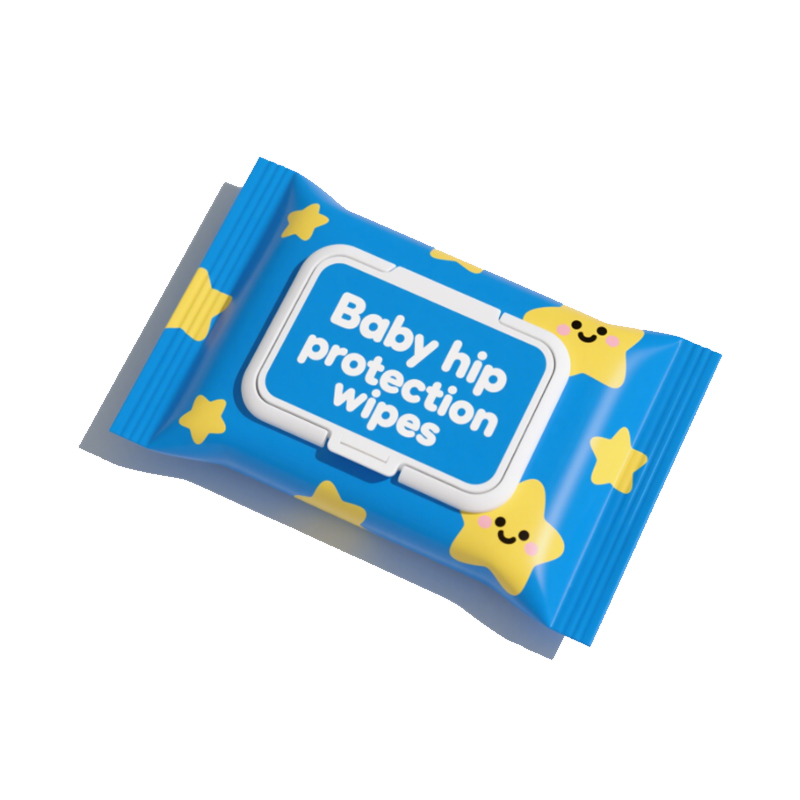 Baby Hip Protection Wet Wipes for Diaper ChangesFor diaper-change cleaning, this soft spunlace wipe uses purified water and plant extracts, free of alcohol, fragrance and fluorescent agents.View Product →
Finished-product buyers rarely specify raw SAP by name, yet the grade sits behind every absorbency claim printed on the pack. In hygiene manufacturing, the SAP load, its position in the core and the acquisition layer above it decide whether fluid is pulled away from skin quickly enough, which is why absorbent articles are engineered as a stack rather than a single material.
Bio-Based and Biodegradable SAP
Bio-based superabsorbent polymers replace part of the acrylic backbone with starch, cellulose, chitosan or alginate, trading peak absorbency for a smaller environmental footprint.
Starch-graft and cellulose-based grades are the most commercially available options. They absorb quickly in fresh water but lose capacity faster than polyacrylate in saline, and their gels are weaker under load. That makes them realistic for agricultural water retention and some single-use pads, and difficult for high-load diaper cores where absorbency at 0.7 psi decides leakage rates.
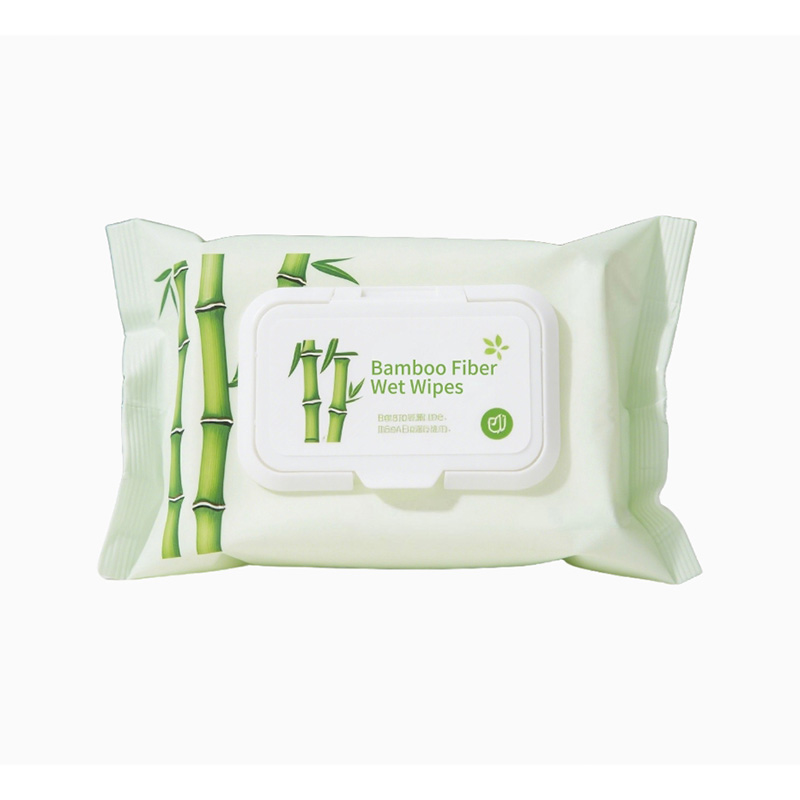 Bamboo Fiber Wet Wipes with Natural Antibacterial PropertiesBiodegradable bamboo-fiber wipes for sensitive skin and surfaces, free of fragrance, alcohol and fluorescent agents.View Product →
Substrate choice matters just as much as the polymer. Bamboo fiber and cotton substrates pair well with lighter bio-based binders and let a manufacturer move a product line toward compostability without rewriting the absorbency specification.
Specifying SAP Products: A Buyer's Checklist
Judge any SAP-backed product on four numbers: absorbency under load, retention after centrifuging, residual monomer and particle size distribution.
- Absorbency under load. Request values at both 0.3 psi and 0.7 psi. A grade that passes at 0.3 psi can still fail in a thin core design.
- Retention versus swelling. High free swell with poor retention means fluid sits in the gel and releases under pressure, which shows up as rewet at the surface layer.
- Residual acrylic acid. Ask for the tested figure and the method, not a general safety statement.
- Particle size distribution. Fines below 150 micrometres increase dust and gel blocking; coarse fractions slow down absorption speed.
- Fluid of record. Confirm whether performance was measured in deionized water, saline or synthetic urine before comparing two quotes.
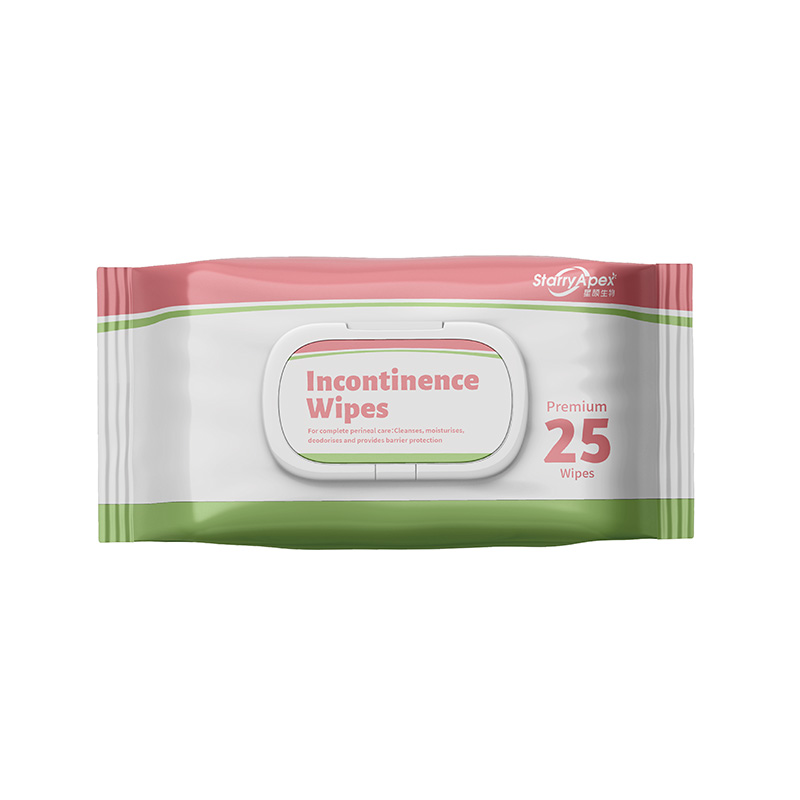 Custom Incontinence Wipes for Daily Care and CleaningSoft nonwoven wipes with weakly acidic solution, aloe and chamomile, individually packed for incontinence care in daily and clinical settings.View Product →
In care and clinical settings the absorbent core is only half of the specification. Our health care and medical wipes range shows how substrate, fluid and packaging are matched to care-home and hospital use.
Frequently Asked Questions
Do superabsorbent polymers dissolve in water?
No. Covalent cross-links hold the polymer chains together, so SAP swells into a gel and stays solid. It can release water slowly when it dries out or when salt is added, but it does not dissolve.
Are superabsorbent polymers biodegradable?
Conventional polyacrylate SAP is not readily biodegradable. Bio-based grades built on starch, cellulose or chitosan break down far more readily, but their saline absorbency is often around half that of polyacrylate, so they are chosen where performance requirements allow it.
What affects absorbency the most?
Ionic strength of the fluid comes first, followed by the pressure on the gel, the cross-link density of the grade and the temperature. Deionized water can show 300 to 500 grams per gram, while the same granule in saline delivers 40 to 60 grams.
Are superabsorbent polymers safe in hygiene products?
Hygiene-grade SAP is supplied with limits on residual acrylic acid, heavy metals and moisture, and it is tested for skin contact use. Buyers should confirm the grade is certified for the intended market and request the residual monomer figure rather than relying on a general safety statement.

