

 English
 日本語
日本語 Español
 عربى
عربى Deutsch
 Français
 Personal Wipes
 Baby Wipes
 Health Care & Medical Wipes
 Household Wipes
 Pet Wipes
 Industrial & Automotive Wipes
 Biodegradable Wipes
 Cotton Buds and Pads
Content
Two suppliers quote the same 80-sheet pack of baby wipes with a 30 percent price gap, and the fragrance, the lid and the shrink wrap are rarely the reason. The difference usually sits in the nonwoven substrate: the fibre blend, the areal weight in grams per square metre, and the bonding route that holds the web together. A spunlace web at 45 gsm and an air-laid web at 65 gsm behave nothing alike once they are saturated with lotion.
This guide covers what non wovens are, how the main bonding routes differ, and how to specify a substrate that survives converting, shelf life and the claims printed on the pack.
What Non Wovens Actually Are
A nonwoven is a fabric-like sheet made directly from fibres that are bonded to one another by mechanical, thermal or chemical means, with no yarn spinning and no weaving or knitting step in the process.
The web is formed first, from short staple fibres or from continuous filaments, and then bonded and finished. Because bonding happens after web formation, four properties can be tuned for a specific wipe:
- Pore size and porosity, which set how quickly the sheet takes up liquid and releases it again
- Areal weight in grams per square metre, which drives cost, opacity and absorbency
- Wet tensile strength in machine and cross direction, which decides line speed and tear resistance
- Surface texture, which decides skin feel, lint level and how evenly lotion is released
That wording is worth keeping during sourcing. Films, wadding and air-laid paper are often offered as cheaper lookalikes, and each fails differently: a film does not absorb, wadding carries almost no tensile load, and a paper-based sheet collapses once it is saturated.
The Bonding Routes That Matter for Wipes
Spunlace, spunbond, melt-blown, air-laid and needlepunch account for nearly every nonwoven used in wet wipes and cleaning products.
Each route gives a different balance of softness, strength and cost, and the choice is usually fixed by the liquid the wipe has to carry.
| Process | Bonding method | Typical weight (gsm) | Handle and wet strength | Common wipe use |
| Spunlace | High-pressure water jets entangle staple fibres | 30-100 | Soft drape, strong when wet, low lint | Baby, personal care and medical wipes |
| Spunbond | Heat and pressure bond continuous filaments | 15-100 | Stiff and strong, low absorbency | Backing layers and industrial wipes |
| Melt-blown | Hot air draws microfibres that self-bond | 15-50 | Fine texture, high barrier, lower tensile | Solvent and industrial wipes |
| Air-laid | Latex or thermal bonding of short fibres with pulp | 40-150 | Bulky, highly absorbent, moderate strength | Household and industrial wipes |
| Needlepunch | Barbed needles interlock fibres mechanically | 100-600 | Thick, durable, less soft | Durable industrial cleaning cloths |
Melt-blown and spunlace are the two routes buyers compare most often, because both can be made soft enough for skin contact yet behave very differently in a solvent-based formula. A closer look at how melt-blown and spunlace wipes compare is worth the time before a specification is locked, since the two differ in fibre diameter, tensile behaviour and lint.
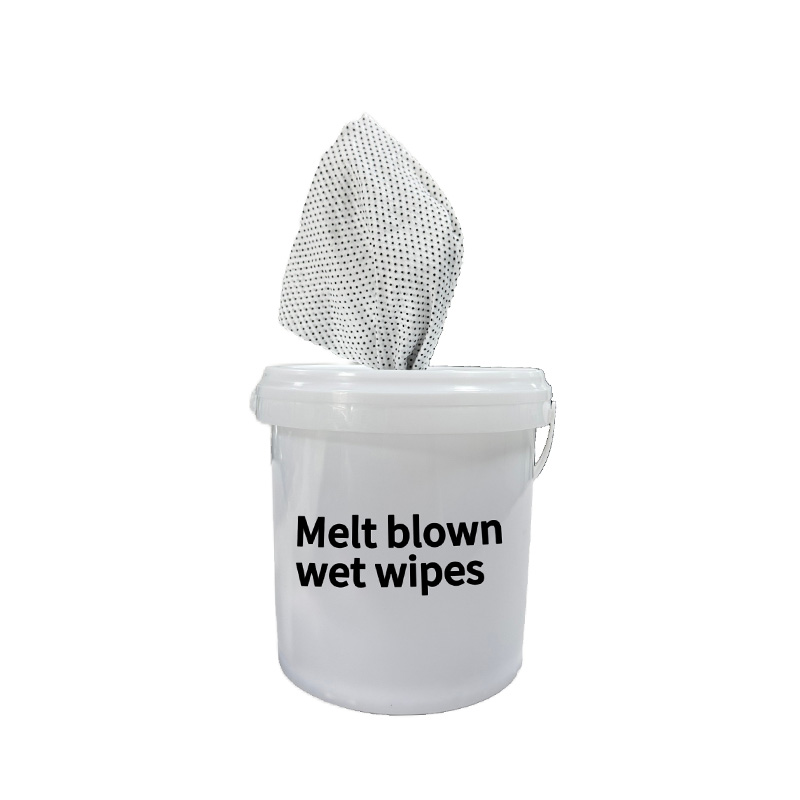 Melt Blown Wet Wipes2. Powerful cleaning abilityView Product →
Why Non Wovens Dominate Wet Wipes
Non wovens dominate wet wipes because absorbency, thickness and wet strength can be engineered on the production line, something no woven or knitted textile can match at the same cost per wipe.
The comparison below explains why converters rarely return to traditional textiles for single-use formats.
Nonwoven substrate
- Keeps most of its dry tensile strength when fully saturated
- Low lint, so the pack stays clean and the sheet does not shed fibres on skin
- Loft and pore structure can be tuned for fast wet-out and controlled release
- Runs at high speed on folding and flow-wrap lines without fraying
Woven or knitted textile
- Loses strength when wet unless the yarn is specially treated
- Sheds fibres and frayed yarns, which shows up on skin and lenses
- Absorbency is fixed by yarn and weave, not by the product brief
- Edges need hemming, which adds cutting and sewing to converting
When you evaluate a sample, ask for measured values rather than descriptions. The four that matter most are areal weight with its tolerance, wet tensile strength in machine and cross direction, absorbency capacity, and lint count.
Specifying a Substrate Without Burning Through Trials
Fix the lotion chemistry first, then the fibre and bonding route, and only then the areal weight and caliper.
Projects that start with a substrate sample and try to fit a formula around it usually spend two extra trial rounds correcting wet-out, lint or seal strength. A short sequence avoids most of that:
- Define the lotion: water-based, alcohol-based, oil-based or emulsion, plus the preservative system and target pH.
- Choose fibre and bonding route to match that chemistry, including blends used for extra absorbency or strength.
- Set areal weight and caliper against the target pack size, sheet count and cost per wipe.
- Validate wet tensile strength, lint and seal integrity on the converting line, not only in the lab.
- Confirm documentation: fibre composition, tolerances, extractables and any certification the destination market requires.
Fibre choice follows the same logic. Cotton formats suit fragrance-free and sensitive-skin briefs, while bamboo-based sheets are selected when the pack has to carry a biodegradability message alongside softness.
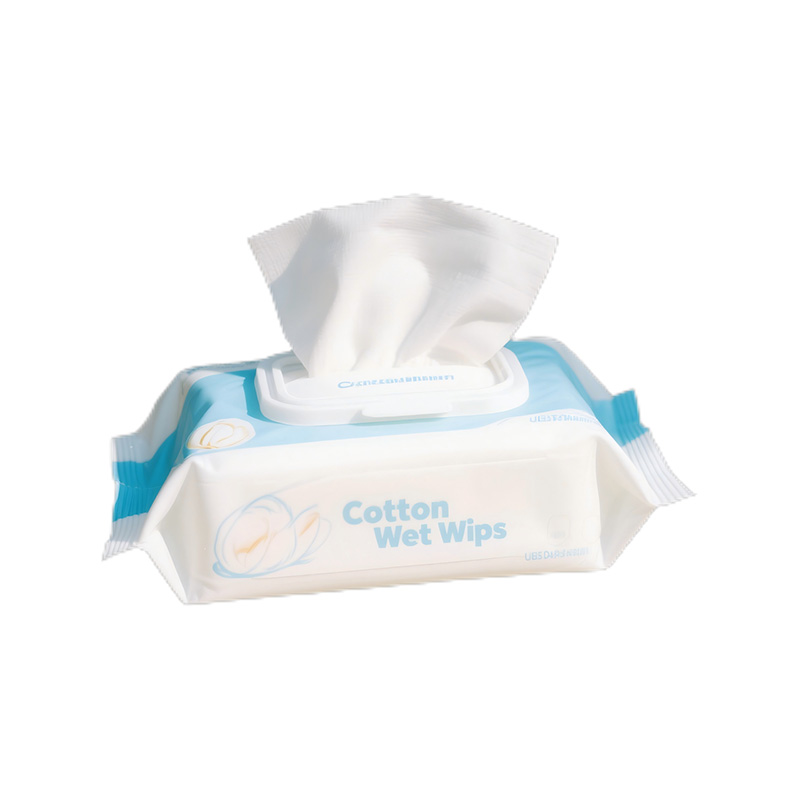 Cotton Wet Wipes1. 100% pure cotton material 2. Strong water absorption 3. Additive-free, gentle and non-irritating 4. Multi-purpose 5. Individually packaged, hygienic and convenient ...View Product →
Sustainability, Disposability and Manufacturing Controls
Disposability and flushability claims depend on the fibre, the bonding route and the environment where the wipe is converted, so they must be verified at the supplier instead of assumed from the product name.
Fibre sourcing
Cotton, viscose, bamboo and pulp blends carry different degradation profiles and different price stability from season to season.
Bonding and disposal
Binder chemistry and web density affect how quickly a sheet breaks down in soil, compost or water.
Manufacturing controls
Cleanroom class, water treatment and line hygiene decide which claims can be printed on a medical or baby pack.
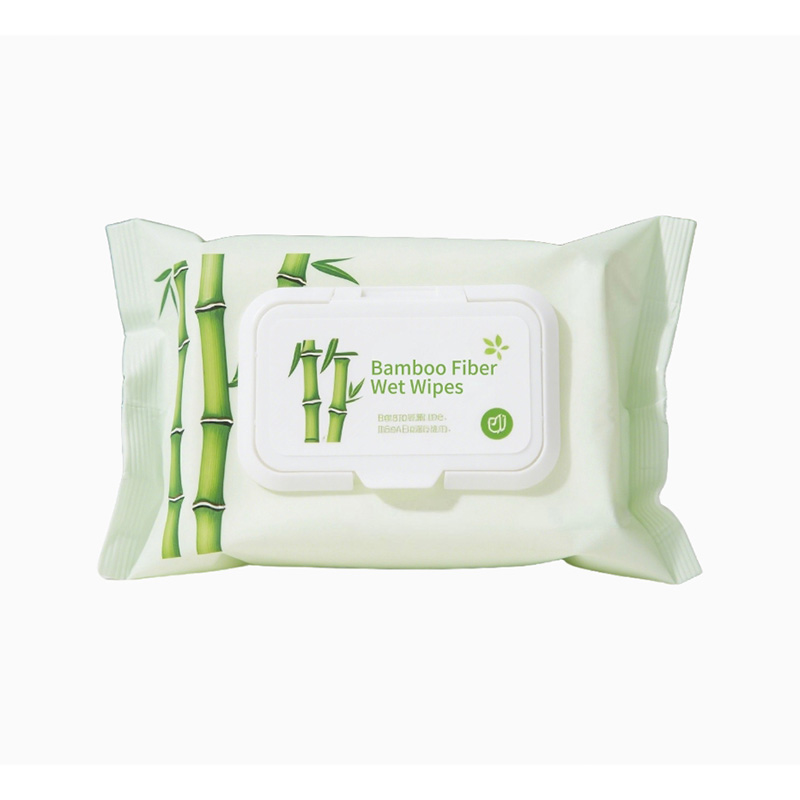 Bamboo Fiber Wet Wipes1. Natural antibacterial properties 2. Superb water absorption 3. Ultra-soft and skin-friendly 4. Environmentally friendly and biodegradable 5. Multi-purpose functiona...View Product →
Frequently Asked Questions
Are non wovens the same as paper?
No. Paper is made from a wet-laid pulp slurry and relies on hydrogen bonding between cellulose fibres. A nonwoven is bonded by mechanical, thermal or chemical means and can use synthetic, natural or blended fibres, so it keeps far more strength and loft when wet.
Which nonwoven is best for wet wipes?
Spunlace suits skin-contact products such as baby, personal care and medical wipes. Melt-blown and spunbond structures perform better when the sheet must carry alcohol or solvent and resist tearing, while air-laid webs win on absorbency for household formats.
Can nonwoven wipes be biodegradable or flushable?
Some can, but the claim depends on the fibre and the binder. Cotton, viscose and bamboo webs degrade faster than polypropylene, and flushability rests on dispersibility testing rather than on the word biodegradable alone.
What areal weight should a wet wipe substrate be?
Most spunlace wipe substrates sit between 40 and 80 grams per square metre. Thinner sheets lower cost and dry out faster, while heavier sheets carry more lotion and feel plusher, so the choice follows the pack format and the price position.
Substrate decisions get settled with data, not adjectives. Once fibre, bonding route and areal weight are fixed against the lotion chemistry and the converting line, price, feel and label claims stop fighting each other.

