

 English
 日本語
日本語 Español
 عربى
عربى Deutsch
 Français
 Personal Wipes
 Baby Wipes
 Health Care & Medical Wipes
 Household Wipes
 Pet Wipes
 Industrial & Automotive Wipes
 Biodegradable Wipes
 Cotton Buds and Pads
Content
A shallow cut on a knee, a scraped elbow, an abrasion from garden work. The instinct is the same: clean the wound quickly and get a dressing on it. But the wipe you choose in that moment matters more than most people realize. Reach for an alcohol pad and a minor scrape turns into a burning, slow-healing irritation. Pick a disinfectant wipe meant for household surfaces and you introduce chemicals that have no place on exposed tissue.
The short answer is that wound cleaning wipes are specifically formulated to be used directly on broken skin. They are pre-moistened, single-use non-woven wipes with a gentle saline or purified-water-based solution. They are not the same as alcohol wipes, disinfectant wipes, or even general antiseptic wipes. Understanding that difference affects both patient comfort and clinical outcomes, and it is the first thing to settle when building a first-aid kit or sourcing a medical product line.
What Makes Wound Cleaning Wipes Different
Wound cleaning wipes are designed for one job: removing dirt, debris, and bacteria from minor cuts, abrasions, and lacerations without damaging the tissue that needs to heal. Their solution is typically sterile saline at 0.9% sodium chloride, purified water, or a mild cleansing base with no alcohol, fragrance, or harsh antiseptics. Because of that ingredient profile, they are safe for direct contact with exposed tissue.
Alcohol wipes, by contrast, are meant for intact skin only. Alcohol denatures proteins in exposed wound tissue, which causes stinging, damages the cells responsible for repair, and slows the healing process. Antiseptic wipes containing chlorhexidine or benzalkonium chloride serve a related but different role: they reduce bacteria on the skin surrounding a wound and can provide extended antimicrobial protection, but they are not ideal for wiping the wound bed itself. The wound bed needs a neutral, physiological solution that cleans without chemical trauma.
This is why hospitals, clinics, and well-stocked first-aid kits carry wound cleaning wipes as a distinct item rather than substituting alcohol or antiseptic products. A product labeled for wound cleaning has been formulated, tested, and documented specifically for that application, which matters for both clinical confidence and regulatory compliance.
What to Check Before You Buy or Use Wound Cleaning Wipes
Whether you are selecting wipes for a home first-aid kit or sourcing them for a healthcare buyer, five characteristics come first.
- Sterility and packaging. Each wipe should be sterile at the point of use. Single-use sachets offer the strongest guarantee because there is no risk of contamination from a previously opened pack. Multi-wipe tubs are more economical for clinics, but they must have a tight-sealing lid and clear guidance on how long the pack remains safe after opening.
- Solution ingredients. Sterile saline or purified water with a gentle, non-ionic surfactant is ideal. Avoid alcohol, iodine, hydrogen peroxide, and strong antimicrobials for direct wound care, because they compromise the cells repairing the wound.
- pH balance. Healthy skin sits at a slightly acidic pH of roughly 4.5 to 5.5. A wound cleaning wipe buffered near that range causes less discomfort and better supports the skin barrier. Check whether the manufacturer publishes pH data.
- Non-woven material. Low-lint non-woven fabric with sufficient wet strength to hold together under gentle pressure keeps fibers from being left behind in the wound. Medical-grade spunlace or melt-blown materials are common choices.
- Regulatory traceability. For clinical procurement, the supplier should provide documentation demonstrating compliance with ISO 13485 or the applicable medical device regulation in the destination market, along with microbiological testing and sterilization validation records.
A practical comparison helps clarify which wipe type belongs in which scenario.
| Wipe Type | Suitable for Open Wounds? | Typical Use |
|---|---|---|
| Wound cleaning wipes (saline-based) | Yes, directly on the wound bed | Cleaning minor cuts, abrasions, and lacerations before dressing |
| Alcohol wipes | No | Disinfecting intact skin before injections or minor procedures |
| Chlorhexidine wipes | Only surrounding intact skin | Pre-operative skin preparation and extended antimicrobial protection around a wound |
| Antibacterial surface wipes | No | Cleaning medical instruments or hard surfaces near the patient |
When procurement teams build their own specifications, product pages from established manufacturers provide a useful reference. For instance, the wound cleaning wipes with saline formulation show how a medical wipe producer addresses solution choice, material, and packaging options in one product line.
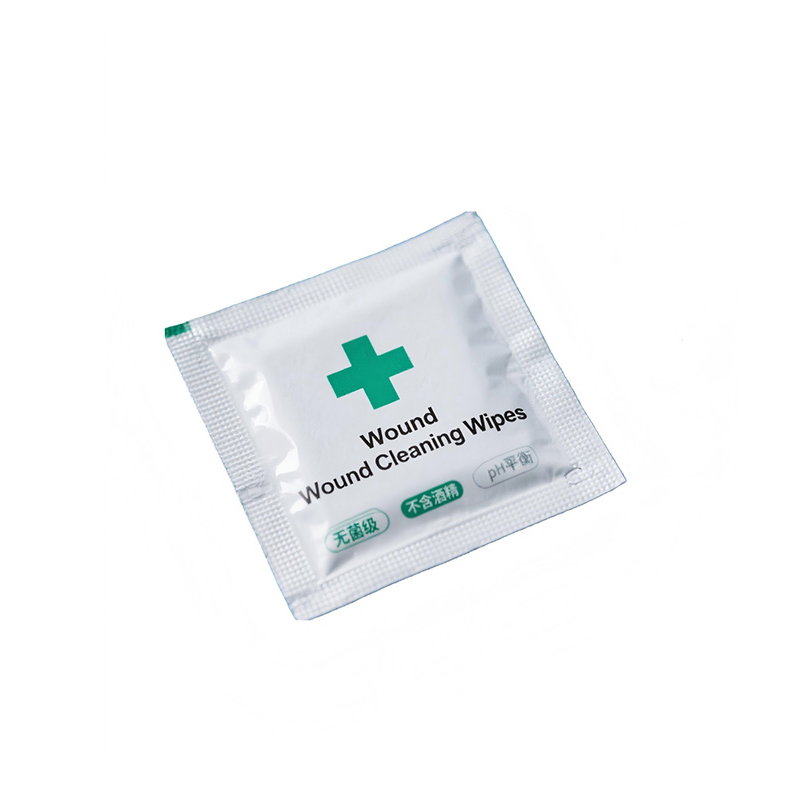 Custom Wound Cleaning Wipes Suppliers, OEM/ODM FactoryZhejiang StarryApex Biotechnology Co., Ltd. is China Custom Wound Cleaning Wipes Suppliers and Wound Cleaning Wipes OEM/ODM Factory, Feat...View Product →
How to Use Wound Cleaning Wipes Correctly
Correct technique matters as much as choosing the right product. Start by washing your hands with soap and water. If the wound is visibly dirty, rinse it under clean running water first. Open the wipe just before use and reseal the pack immediately if it is a multi-wipe container.
- Hold the wipe at one edge and clean from the center of the wound outward in a single direction. This prevents pushing bacteria from the surrounding skin back into the wound.
- Use gentle pressure rather than scrubbing. Newly forming cells and exposed tissue fragments are easily damaged by friction.
- Take a fresh wipe when more than one pass is needed, especially if the first wipe has picked up visible dirt or fluid.
- Allow the wound to air-dry briefly, then apply the dressing or follow the professional care protocol you have been given.
- Never reuse a wipe, even on the same wound. Dispose of it after a single pass.
Wounds with significant bleeding, deeper tissue exposure, or embedded objects are beyond the scope of wipe-based first aid. Professional medical assessment should take priority. For a broader look at where wound cleaning wipes fit in the full medical wipe category, the guide to health care and medical wipes types and uses explains the distinctions across product categories.
What Procurement Teams Should Confirm with a Manufacturer
If your company imports, distributes, or repackages wound cleaning wipes, the finished product is only part of the evaluation. The manufacturing environment and quality system determine whether the wipes actually achieve their sterility and safety claims.
- Production environment. A purification workshop or cleanroom with controlled air pressure, temperature, and particle counts is a basic requirement for sterile wet wipes. Ask for the cleanroom class rating, recent monitoring records, and a clear explanation of how people, materials, and product move through the facility.
- Quality management certification. ISO 13485 certification signals a quality management system designed for medical devices, which is the level buyers should expect for wound care products. GMPC certification is also relevant when the wipes are classified as cosmetic or personal care products in the destination market. Verify both certifications with the issuing body rather than accepting claims from marketing materials alone.
- Material and solution traceability. The supplier should be able to trace the non-woven substrate, purified water, and any active ingredients back to their origin, and provide evidence of biocompatibility or skin irritation testing. Request the technical data sheet for the substrate, water purification specifications, and a full list of buffering and preservative agents.
In many sourcing scenarios, antiseptic wipes enter the same purchase order as wound cleaning wipes because both are used in one first-aid protocol. A chlorhexidine wipe for skin preparation around a wound is a complementary product that lets a distributor cover the complete wound care workflow with a single supplier.
 Custom Chlorhexidine Wipes Suppliers, OEM/ODM FactoryZhejiang StarryApex Biotechnology Co., Ltd. is China Custom Chlorhexidine Wipes Suppliers and Chlorhexidine Wipes OEM/ODM Factory, Featur...View Product →
The distinction between cleaning a wound and disinfecting the skin around it is central to good first aid and clinical practice. Choosing the right wipe, verifying the manufacturing quality behind it, and teaching the end user the correct technique are the three actions that prevent the most common wound care failures.
Wound cleaning wipes are a small consumable with an outsized role in patient outcomes. For anyone selecting them, whether for a clinic, a home first-aid kit, or a distribution catalog, the logic is straightforward: match the wipe to the tissue it touches, confirm the supplier has the certification and cleanroom conditions to back up their claims, and remember that a stronger antiseptic is not always a better clean.

