

 English
 日本語
日本語 Español
 عربى
عربى Deutsch
 Français
 Personal Wipes
 Baby Wipes
 Health Care & Medical Wipes
 Household Wipes
 Pet Wipes
 Industrial & Automotive Wipes
 Biodegradable Wipes
 Cotton Buds and Pads
Content
Picture a kitchen counter after cooking: grease spots, splattered sauce, sticky patches near the stovetop. A spray bottle and a paper towel can handle it, but a well-made kitchen cleaning wipe speeds up the job significantly. The real question is not whether to use wipes, but how to pick one that removes grease effectively without dulling your surfaces or leaving a sticky residue. In short: focus on the substrate, the formula, and the manufacturer’s quality controls.
What Makes a Good Kitchen Cleaning Wipe?
Substrate: thickness, texture, and durability
Kitchen wipes need to survive aggressive scrubbing. A thin wipe tears apart on rough grout or scratched stainless steel. Look for a nonwoven substrate with a raised texture or embossed pattern — the peaks catch grease and food residue, while a dense fibre base holds more liquid and resists shredding. Spunlace nonwoven materials, for example, balance softness with tensile strength, which is why they are common in household and kitchen wipes. Thickness matters too; a basis weight of around 50 gsm or higher gives you enough structure for repeated passes.
| Substrate | Key benefits | Watch out for |
|---|---|---|
| Spunlace nonwoven | Strong, soft, good liquid retention | Slightly higher cost |
| Melt-blown microfiber | Excellent grease pickup, very fine fibres | May lack durability if too thin |
| Bamboo fibre blend | Renewable, naturally absorbent | Tear strength is lower if not blended |
Formula: degreasing power vs. surface compatibility
The cleaning liquid is just as important as the cloth. Most kitchen wipes rely on nonionic and anionic surfactants to break down oil and food residue. A good formula should work at room temperature and be rinse-free, meaning it evaporates without leaving a film. But strong alkaline degreasers can etch natural stone and stress certain laminates. For everyday use, choose a wipe with a measured pH around neutral to slightly alkaline (pH 6–8). If you clean a coated cabinet or appliance, check that the wipe is labelled safe for that finish. Many kitchen wipes also include a small amount of solvent or alcohol to help dissolve cooked-on grease; that is fine on glazed tile and sealed granite, but avoid alcohol on unsealed porous surfaces.
How to Use Kitchen Cleaning Wipes Safely and Effectively
Surfaces that accept kitchen wipes (and a few that do not)
Kitchen wipes are designed for hard surfaces: ceramic tile, glazed porcelain, stainless steel, sealed stone, laminate, and finished wood. They are also convenient for appliance exteriors and range hoods. However, do not use a general kitchen wipe on unsealed marble or stone, bare cast iron, or food-contact surfaces such as wooden cutting boards unless the label explicitly says food-safe. For surfaces that do contact food, follow with a quick rinse. For a broader overview of all household wipe categories and how kitchen versions differ, see our guide to household cleaning wipes.
| Surface | Typically safe | Notes |
|---|---|---|
| Sealed granite | Yes | Check pH; avoid highly acidic formulas |
| Stainless steel | Yes | Wipe in the direction of the grain to avoid streaks |
| Glazed ceramic tile | Yes | Rinse-free formulas leave no haze |
| Unsealed marble | No | Acidic or alkaline products can etch the stone |
| Cast iron | No | Wipes can strip seasoning; use a dry cloth instead |
| Wooden cutting board | Only if labelled food-safe | Use a dedicated food-safe wipe or soap and water |
Technique: contact time, pressure, and rinsing
Wiping quickly does little to break down stubborn grease. Give the solution a few seconds of dwell time — typically 10 to 20 seconds — before scrubbing. Use light pressure first, then increase if needed. Because these wipes are designed to be rinse-free, you can simply wipe and leave the surface to dry. Still, if you have used a wipe on a surface that touches food, a rinse with water is a safe habit.
Common Mistakes and How to Avoid Them
- Using the same wipe for raw-chicken juice and then the cutting board. This spreads bacteria. Use a fresh wipe for food-contact areas, or choose a dedicated antibacterial wipe for that job.
- Leaving the wipe too wet. Excess liquid can seep into seams and cause damage. Wring it slightly before applying to sensitive surfaces.
- Rubbing hard without letting the cleaner work. You end up spreading the grime instead of lifting it. Let the formula dissolve the grease first.
- Using a regular kitchen wipe on hot surfaces. The liquid may evaporate too quickly and leave residue. Let the surface cool before wiping.
Why the Manufacturer’s Quality System Matters
Beyond the product: certification and production environment
Kitchen cleaning wipes are regulated as consumer products or, in some cases, antimicrobial products. A trustworthy manufacturer follows strict hygiene and quality standards during production. Look for certifications such as ISO 9001 and ISO 22716, which cover quality management and good manufacturing practices for cosmetics and household products. For wet wipes specifically, a cleanroom production environment (for instance, a 100,000-class purification workshop) reduces the risk of contamination. These factors matter whether you are a private-label buyer or a consumer who wants predictable performance.
Partnering with a supplier that understands wet wipe technology
The best kitchen wipes come from manufacturers that control both the substrate and the liquid formulation. At StarryApex, we develop and produce a full range of household wipes, including a dedicated kitchen-cleaning wipe that is engineered to dissolve kitchen grease, rinse away food soils, and stay safe on common hard surfaces. If you are sourcing wipes for your brand, you can review our complete household wipe collection to see how material choices and packaging affect cost and performance. For a deeper look at choosing the right product for your kitchen, our complete kitchen wipes guide covers the selection criteria in detail.
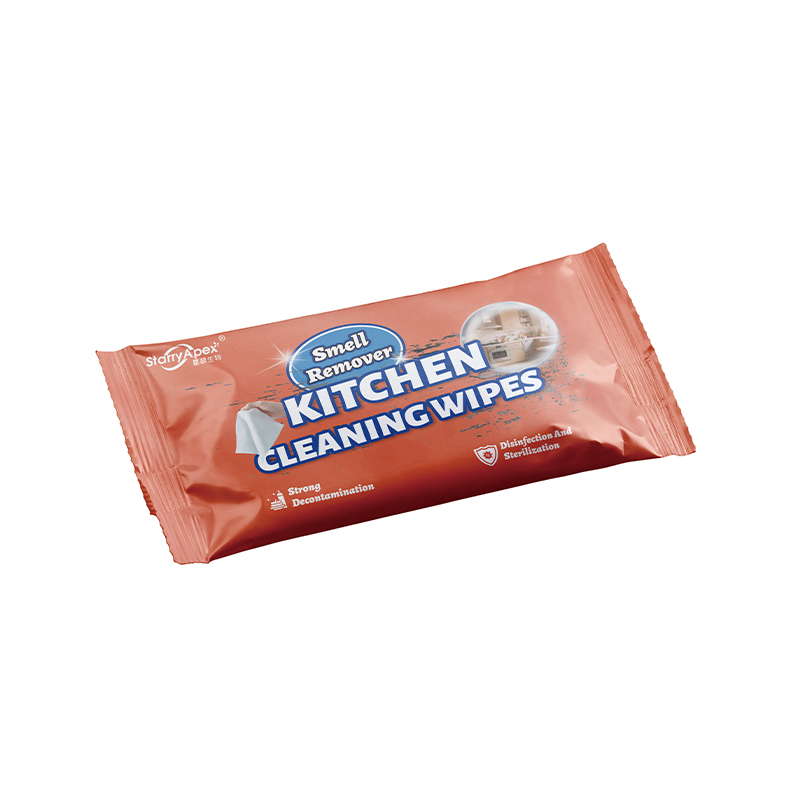 Custom Kitchen Cleaning Wipes Suppliers, OEM/ODM FactoryZhejiang StarryApex Biotechnology Co., Ltd. is China Custom Kitchen Cleaning Wipes Suppliers and Kitchen Cleaning Wipes OEM/ODM Factory, ...View Product →
The Bottom Line
A good kitchen cleaning wipe is more than a wet paper towel. It combines the right nonwoven substrate, a balanced cleaning formula, and manufacture under controlled conditions. Whether you clean once a day or once a week, check the label for surface compatibility, allow enough dwell time, and source from a supplier that takes hygiene and quality seriously.

