

 English
 日本語
 Español
 عربى
 Deutsch
 Français
 Personal Wipes
 Baby Wipes
 Health Care & Medical Wipes
 Household Wipes
 Pet Wipes
 Industrial & Automotive Wipes
 Biodegradable Wipes
 Cotton Buds and Pads

Content
- 1 Wipes Manufacturing in Five Linked Stages
- 2 The Substrate Decision Fixes Half the Specification
- 3 Formulation and Wetting: The Chemistry Half of the Line
- 4 Cleanroom Class and Contamination Control
- 5 Folding, Cutting and Seal Integrity
- 6 Quality Control and the Records Buyers Should Request
- 7 How to Vet a Wipes Manufacturing Partner
- 8 Frequently Asked Questions About Wipes Manufacturing
Most wipes failures are decided in seconds, not months. The web is unwound, saturated, folded, cut and sealed in a single pass, and a drift of a few grams per square metre or a few degrees at the sealing jaw can push an entire batch out of specification. That is why wipes manufacturing is judged less on the lotion recipe than on how tightly a plant can hold its process window across a full shift.
Zhejiang StarryApex Biotechnology runs that process in Huzhou, Zhejiang, in a 100,000-class purification workshop with automated converting lines and an in-house formulation laboratory. Its output spans eight product families, from 99 percent pure water baby wipes to industrial, automotive and biodegradable formats.
Wipes Manufacturing in Five Linked Stages
Wipes manufacturing is a continuous converting process that takes a dry nonwoven web, saturates it with a formulated lotion, folds and cuts it to sheet size, and seals it into packaging in one uninterrupted pass.
- Unwinding and tension control. Jumbo rolls of 1.5 to 2.5 m width are spliced and pulled under constant tension, because an undetected splice becomes a thin, weak sheet in the middle of a pack.
- Lotion application. The web is saturated at a kiss-roll, spray or foam station, and the target add-on is confirmed by weighing web samples before and after wetting.
- Folding. Z-folds, C-folds and interleaved stacks decide whether a sheet lifts out one at a time or drags the next three with it.
- Cutting. Rotary dies cut the sheet to length, usually within about 1 mm, so stack counts and pack weights stay predictable at line speed.
- Sealing and packing. Flow-wrap film is bonded at a set temperature, pressure and dwell time, then fitted with a resealable label that has to survive dozens of open and close cycles.
Because the stages run back to back, the control that matters most sits between wetting and sealing. Lotion dosed too early on a slow line migrates toward the edges of the roll, and lotion applied unevenly surfaces months later as a pack that is dry on top and soaked at the bottom.
The Substrate Decision Fixes Half the Specification
The nonwoven substrate sets tensile strength, softness, lint level and whether a wipe can be sold as dispersible, long before the lotion is mixed.
| Substrate | Bonding route | Typical basis weight | Where it fits |
| Spunlace, viscose and PET | Hydroentangled | 40 to 80 gsm | Baby, facial and personal care |
| Airlaid | Latex or thermal bonded | 50 to 70 gsm | High lotion hold with low lint |
| Meltblown | Melt blown | 30 to 60 gsm | Industrial, oil and solvent work |
| Cotton spunlace | Hydroentangled | 45 to 90 gsm | Sensitive skin and organic claims |
| Bamboo viscose | Hydroentangled | 45 to 70 gsm | Biodegradability messaging |
| Wet-laid dispersible | Wet laid | 50 to 70 gsm | Flushable toilet wipes |
Spunlace dominates consumer wipes because hydroentangling produces a soft sheet with balanced strength in both directions. Airlaid holds more liquid per gram but feels drier in the hand. Meltblown earns its place in workshops, where solvent resistance matters more than softness. Fibre names alone do not support a claim: bamboo or cotton content has to be verified by test, not by label copy.
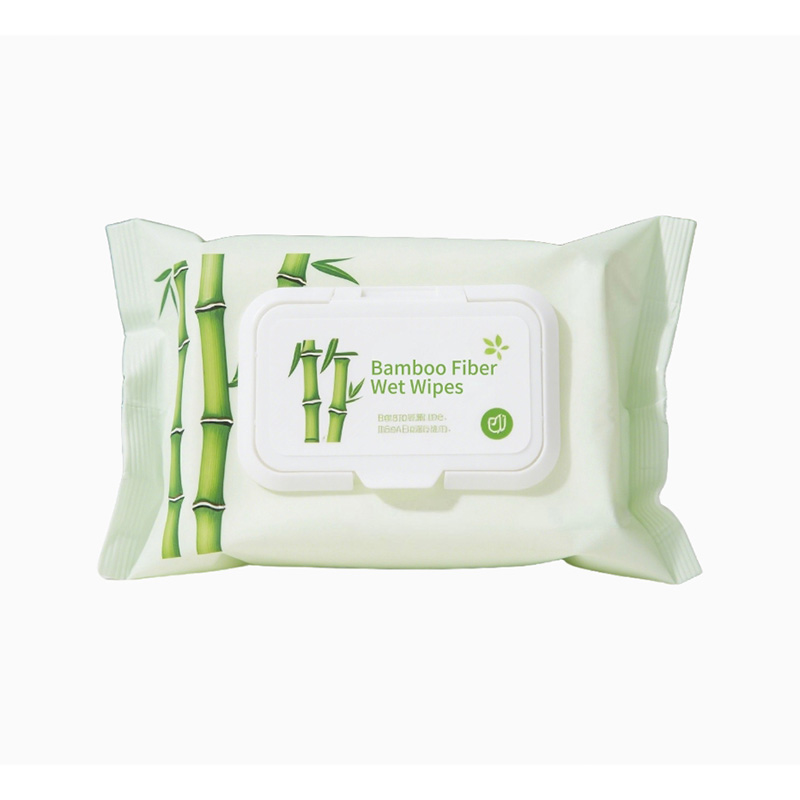 Custom Bamboo Fiber Wet WipesCustom bamboo-fiber wet wipes for gentle face, hand and surface cleaning, offered without fragrance, alcohol or fluorescent agents and in multiple pack formats.View Product →
Basis weight drift is the quietest cost in the process. A 5 gsm rise on a 60 gsm web lifts lotion demand by 15 grams per square metre at 300 percent add-on, and pack weight, film length and carton count all move with it.
Formulation and Wetting: The Chemistry Half of the Line
Formulation decides what a wipe does to skin or to a surface, and the wetting station decides whether that formulation reaches every sheet evenly and stays there through shelf life.
- Water quality. Purified water is the largest ingredient by weight in most baby and personal care wipes, so conductivity, microbial counts and loop sanitisation belong in the specification.
- pH and buffering. A formula that drifts outside the skin-compatible range shortens shelf life and can undercut the preservative system.
- Preservative system. It has to be matched to the actual formula and confirmed by challenge testing rather than copied from a template.
- Alcohol content. Disinfecting types usually run ethanol or isopropyl alcohol at 60 to 75 percent, and below that band the antimicrobial claim gets harder to defend.
- Surfactants and foam control. A formula that foams in the filler head causes weight variation from pack to pack.
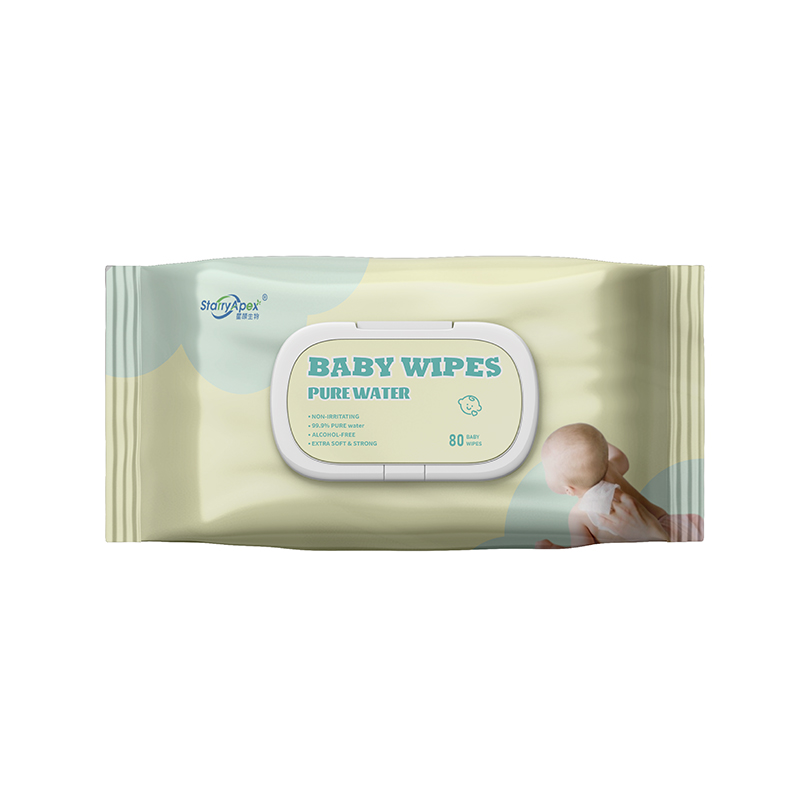 99% Pure Water Baby WipesBaby wipes made with multi-purified water and soft cotton or modal fabric, pH-balanced and hypoallergenic, suitable for sensitive skin and daily cleaning.View Product →
Wet-out is what separates a good lotion from a good wipe. If the web does not saturate evenly, the top sheet of the pack arrives dry while the bottom sheet is soaked.
Cleanroom Class and Contamination Control
Cleanroom classification sets the particulate and microbial ceiling for the whole line, and it is the first item to verify at any plant claiming baby-grade or medical output.
The class number only means something when it is backed by differential pressure, air-change rates, gowning discipline, personnel flow and a water loop sanitised on schedule. Environmental monitoring results should be trended, not filed. Medical formats sit inside the same envelope and add bioburden limits, cleaning validation between runs and traceability from substrate lot to finished carton.
 Custom Instrument Surface Cleaning and Disinfection WipesCustom wipes for medical, lab and electronic instruments, using lint-free non-woven fabric and a residue-free formula to remove oils, blood and drug residues.View Product →
Folding, Cutting and Seal Integrity
Folding and sealing decide whether a wipe leaves the pack one sheet at a time and whether it is still wet in month eighteen.
- Fold format. Z-folds and interleaved stacks suit pop-up tubs, while C-folds suit flow-wrap packs and refills.
- Sheet length tolerance. Roughly 1 mm keeps stack counts and pack weights predictable at high line speed.
- Seal window. Each film structure has its own temperature, pressure and dwell combination, and running one setting across three films is a common source of leakers.
- Resealable labels. Adhesive has to hold after repeated opening, including in humid bathrooms and hot cars.
- Moisture loss. A sound pack loses only a few percent of its mass over shelf life, while a leaking end seal loses far more.
Seal integrity is the cheapest test in the plant and the most expensive one to skip. A pack that leaks at the end seal fails faster than any formulation fault can be blamed for.
Quality Control and the Records Buyers Should Request
A credible wipes manufacturer tests incoming substrate, in-process lotion and finished packs, and can still produce those records long after the container has sailed.
- Substrate: basis weight, caliper, tensile strength and splice count per roll.
- Lotion: pH, viscosity, appearance and microbiological results for every batch.
- Finished pack: add-on, seal strength, drop test and label adhesion.
- Stability: accelerated storage at elevated temperature and humidity, plus a check on actual pack weight loss.
- Documentation: certificates, safety data sheets and the batch record that ties them together.
The paperwork side is where most supplier audits end. Ask for the certification documents behind each claim, then check that the scope on the certificate actually covers wet wipes rather than a neighbouring product category.
Retention period is the tell. A supplier who can pull lotion pH, add-on and seal parameters for a shipment from two years ago is describing a system, not a sales pitch.
How to Vet a Wipes Manufacturing Partner
Vet the line, not the brochure. Add-on control method, seal window per film, environmental monitoring and substrate lot data tell you more than a factory tour video.
Signals of a controlled line
- Add-on verified by weight every shift, not by formula arithmetic
- Splice detection and tension alarms on the unwind
- Seal parameters logged per SKU and per film structure
- Environmental monitoring trended month over month
Warning signs
- Add-on quoted as a percentage with no method attached
- One seal setting used across all film structures
- No bioburden data behind a medical claim
- Substrate substituted without re-validation
It also helps to see where the line sits inside the plant. A manufacturer that publishes its manufacturing capabilities, equipment list and workshop classification is easier to audit than one that answers technical questions with a catalogue page.
Samples show what a factory can do once. Process data shows what it can do every week of the year.
Frequently Asked Questions About Wipes Manufacturing
How long does it take to move from sample to mass production?
For an existing substrate and film structure, sampling usually takes one to two weeks and mass production follows artwork and label approval. A new formulation adds stability testing, typically three months accelerated plus a real-time check on the finished pack.
What is the most common reason wipes dry out in the pack?
Failure at the end seal or the resealable label, followed by a film barrier too thin for the intended shelf life. Lotion volume matters, but a leaking pack loses moisture regardless of how much was dosed at the wetting station.
Can one factory produce consumer and medical wipes?
Yes, provided the medical formats run under a medical device quality system with defined changeover cleaning, bioburden limits and traceability. Ask specifically how the line is cleared between a cosmetic run and a medical run.
What drives minimum order quantities for private label wipes?
Film and label tooling, substrate minimums and print runs. A standard 80-sheet flow pack on a stock film lands far lower than a custom-shaped tub with a printed shrink sleeve.
The short version: substrate, add-on, seal window and documentation decide whether a wipes programme holds up at retail. Everything else is packaging.

